What Is a 45-Minute AI Strategy Call and What You Leave With?


Table of Contents
- Introduction
- What is a 45-minute AI strategy call for small business?
- What happens during a 45-minute AI consultation step by step?
- How should you prepare for an AI roadmap session?
- What deliverables should you leave with from an AI strategy call?
- How does a paid AI strategy call differ from free ChatGPT advice?
- When is a 45-minute AI consultation worth paying for?
- When can you skip a paid AI roadmap session for now?
- What should success look like after your AI roadmap session?
- Ready to book your 45-minute roadmap call?
- Frequently Asked Questions (FAQs)
Introduction
Most small business owners I speak with fall into one of two camps. On one side are the dabblers who tried ChatGPT, asked for a few marketing ideas, and stalled. On the other are the overwhelmed who hear about agents, automation, and AI-native workflows but have no clear starting point without breaking what already works.
A 45-minute AI strategy call sits between those extremes. It is a focused, time-boxed working session-not a product demo, not a keynote on the future of AI-designed to turn "we should use AI" into a concrete plan you can act on this month.
As an AI integration consultant, I run these sessions regularly. Below is what actually happens in a 45 minute AI consultation, how to prepare, what you should leave with (ranked automation backlog, customer journey map, DIY vs hire clarity), how that compares to free ChatGPT advice, and when paying for an AI roadmap session beats staying in DIY mode.
What is a 45-minute AI strategy call for small business?
An AI strategy call for a small business is a diagnostic and design conversation about your business model, processes, and constraints. The goal is a short, realistic AI roadmap-not a full "AI operating system" blueprint in one sitting.
In forty-five minutes you typically decide:
- Where AI can create immediate value in your context.
- Which processes are the best automation candidates.
- What is safe to build yourself with tools you already pay for.
- What needs technical implementation or outside help.
The format works for small teams because time is scarce, the org is small enough to map core flows quickly, and even one or two well-chosen automations can move revenue or capacity disproportionately. You are not buying hours of implementation in the call; you are buying focus, prioritization, and a written plan you can execute or hand to a builder.
What happens during a 45-minute AI consultation step by step?
Every consultant has their own style, but a productive 45 minute AI consultation usually follows five beats.
Goals and constraints (about 5-10 minutes). We start with outcomes, not tools. Typical questions: What are your top business goals for the next 6-12 months? Where is friction highest-leads, sales follow-up, onboarding, fulfillment, support, reporting? What are hard constraints-budget, compliance, data sensitivity, team skills, software you must keep? "Use AI" is not a goal. "Cut lead response time from 24 hours to 2" is.
Current workflows (about 10-15 minutes). Next we walk how work actually happens. "A lead hits the website form-then what?" "A customer asks for a quote on WhatsApp-how do you respond?" "At month end, what reports do you compile manually?" We whiteboard in plain language and flag repetitive steps, copy-paste between tools, waiting times, single points of failure, and error-prone data entry. Those are where automation and AI usually pay off first.
Customer journey sketch (about 10 minutes). We flip to the buyer's path: discovery, pre-purchase touchpoints, delivery, post-sale support and upsell. Each touchpoint is a leverage point-content, follow-up, triage, internal copilots, check-ins. We note where the journey feels lumpy-leads drop, customers wait, one hero employee carries the load.
Automation backlog draft (about 10-15 minutes). Only then do we name specific use cases: personalized lead replies, proposal drafts from templates, call summaries into CRM, support triage, internal SOP assistants, report automation. Each idea gets a quick read on impact, effort (no-code vs custom), and risk. We do not wire every API live; we size projects as "this week" vs "Q3 with a developer."
Prioritize and assign DIY vs hire (about 5-10 minutes). We pick a top three, decide what you can test with ChatGPT, Claude, Zapier, Make, or n8n on your stack, and what warrants an AI integration consultant or developer. You leave knowing what version 1 looks like in the next thirty days.
How should you prepare for an AI roadmap session?
Preparation is light but high leverage. You do not need a fifty-page deck.
Bring a short list of pain points in plain language-not tool names. "Leads sit in inbox over the weekend" beats "we need better MarTech." Note which software you rely on daily: CRM, email, accounting, project management, support desk, spreadsheets. If you have rough numbers (leads per week, hours on reporting, average response time), bring them; they sharpen prioritization.
Decide who should be in the room: a decision-maker (owner or GM) plus one person who lives in day-to-day operations. Two to three engaged people is ideal; a large committee slows the AI roadmap session.
Optional but useful: one example of a process that already works well (so we do not break it) and one example of a process everyone dreads (so we target relief first).
What deliverables should you leave with from an AI strategy call?
If you are paying for an AI strategy call, you should receive more than an interesting conversation. Packaging varies, but three deliverables separate a real session from a generic chat.
What does a ranked automation backlog include?
The automation backlog is a prioritized list of AI and automation opportunities tied to your workflows-not a random "100 ways to use AI" list.
Each line should include:
- A short description in your language (e.g. "Auto-draft first reply to new leads using form fields").
- Expected impact (hours saved, faster response, fewer errors).
- Rough effort (Zapier plus Gmail plus an LLM vs custom API work).
- Priority: now, next, later-with a highlighted top three.
That one page stops shiny-object chasing and gives your team a shared "these first, here's why."
How does a customer journey map fit a short AI roadmap session?
A full journey workshop can take hours; in a 45-minute AI consultation you still want a concise map: awareness, interest, decision, purchase, fulfillment, post-sale-with channels at each stage (site, email, phone, WhatsApp, CRM, invoicing). Mark where AI enters first and what job it does (content, qualification, proposals, support triage). Even a verbal map, followed by a one-page summary from the consultant, anchors automations to customer experience instead of random internal experiments.
How do DIY versus hire recommendations work after the call?
For each top initiative you should know: Can you ship version 1 with off-the-shelf tools and existing subscriptions? Does it need specialist integration (webhooks, CRM APIs, compliance review)? Who owns maintenance when it fails? The DIY vs hire split is not moral judgment-it is risk and speed. Many teams DIY the first workflow, then book build help for the second once they have proof and vocabulary from the call.
How does a paid AI strategy call differ from free ChatGPT advice?
You can ask any model today: "Give me 20 ways my small business can use AI." You will get plausible ideas. The gap is not that consultants know more facts than the latest model.
Context and tradeoffs. Models do not see your margins, team strengths, brittle CRM APIs, or customer expectations. In a live AI strategy call, we kill theoretically powerful ideas that would require a $20k stack rebuild and promote three simpler flows that compound faster.
Compression vs overload. Free tools reward "what else?" until you have idea paralysis. A paid AI roadmap session compresses options into a ranked short list with next actions.
Operational detail. Models describe principles well; small businesses need messy specifics-who maintains the zap, what happens on API errors, how to keep brand voice on customer-facing drafts. Consultants also share pattern libraries: which "cool" automations usually fail, which boring ones save dozens of hours monthly.
Commitment. Booking and paying creates a focus block. Midnight ChatGPT brainstorming rarely changes Monday operations; a calendar hold and a follow-up question-"did the first automation go live?"-often does.
When is a 45-minute AI consultation worth paying for?
Paying usually makes sense when:
- You have real customers and repeatable work, so automations compound.
- The team is strained by repetitive admin, reporting, or routine communication.
- You are about to sign major software (CRM swap, marketing platform, portal rebuild) and want AI factored in before lock-in.
- You want adoption across the team, not just power users in one department.
- You handle sensitive data, regulated fields, or a strict brand voice and need fenced safe zones for AI.
In those cases, an hour of expert prioritization often costs less than one month of the wrong subscription or a half-built integration nobody owns.
When can you skip a paid AI roadmap session for now?
Stay in DIY mode a bit longer if you are still pre-revenue with no repeatable process, operations are extremely simple (solo freelancer, handful of projects), or you genuinely enjoy experimenting and have time to iterate.
Stay in DIY mode a bit longer if you are still pre-revenue with no repeatable process, operations are extremely simple (solo freelancer, handful of projects), or you genuinely enjoy experimenting and have time to iterate. Use ChatGPT for drafts and research; revisit a paid AI strategy call when repeated manual work hurts every week.
What should success look like after your AI roadmap session?
A call only matters if something ships. A realistic 30-60 day outcome:
- One to three top backlog items live or in active build.
- A named owner monitoring each workflow.
- Simple metrics tracked: response time, hours saved, error rate, conversion step.
- Team visibility so AI feels like relief, not surveillance.
Examples: new leads auto-logged with AI-drafted first replies within minutes; weekly status summaries from your project tool; an internal knowledge assistant on your SOPs. From there you either continue DIY, scope deeper build work, or book a follow-up to refresh priorities.
Ready to book your 45-minute roadmap call?
If you are past inspiration and stuck on what to do first, a focused session is the bridge between possibility and practice. You should leave with a customer-journey sketch, a ranked automation backlog, clear DIY vs hire calls on your top three initiatives, and a thirty-day action plan-not another tool trial.
I offer a paid 45-minute AI strategy call for owners and operators who want that clarity without a multi-week engagement. You pick a time, pay securely through Topmate, get calendar and prep notes, and we work live on your stack and constraints.
Reserve my roadmap call on the roadmap landing page, or book a 45-minute roadmap call when you are ready to turn the framework above into your prioritized plan. If you prefer to self-serve first, use the backlog and journey sections here as a template-and book when you want an outside pair of eyes on rank and risk.
Frequently asked questions
Quick answers on the topics covered in this article.
It is a paid working session focused on your business goals, workflows, and constraints-not a generic AI demo. You leave with prioritized automation ideas and clear next steps, usually within forty-five minutes.
Typical flow: clarify goals and constraints, walk key internal processes, sketch the customer journey, draft and rank an automation backlog, then decide DIY vs hire for your top three initiatives.
Bring plain-language pain points, your core software list, optional rough metrics (lead volume, response times, hours on reporting), and the decision-maker plus one operations person who knows daily reality.
Expect a ranked automation backlog, a simple customer journey map with AI touchpoints noted, and DIY versus hire guidance for near-term builds. Many consultants send a short written summary after the live session.
Models generate generic ideas without your tradeoffs, stack limits, or accountability. A call compresses options to your context, ranks by impact and effort, and commits you to a specific plan.
When you have repeatable revenue work, repetitive manual load, an upcoming software decision, team-wide adoption goals, or compliance and brand constraints that need fenced AI use.
Yes, if operations are simple and you have time to experiment. Use the same steps: map workflows, sketch the journey, rank ideas by impact and effort, pick a top three. Pay when you need faster prioritization or complex integrations.
A prioritized list of automation and AI opportunities specific to your business, each with impact, effort, and timing (now, next, later)-not a generic industry checklist.
Usually not in the same forty-five minutes. The session defines what to build and who should build it; implementation is DIY, a follow-on project, or a scoped engagement.
Visit /roadmap-call to reserve my roadmap call. Checkout runs on Topmate: choose a slot, pay securely, and you will receive prep notes before we meet.
Share this article
Related workflows
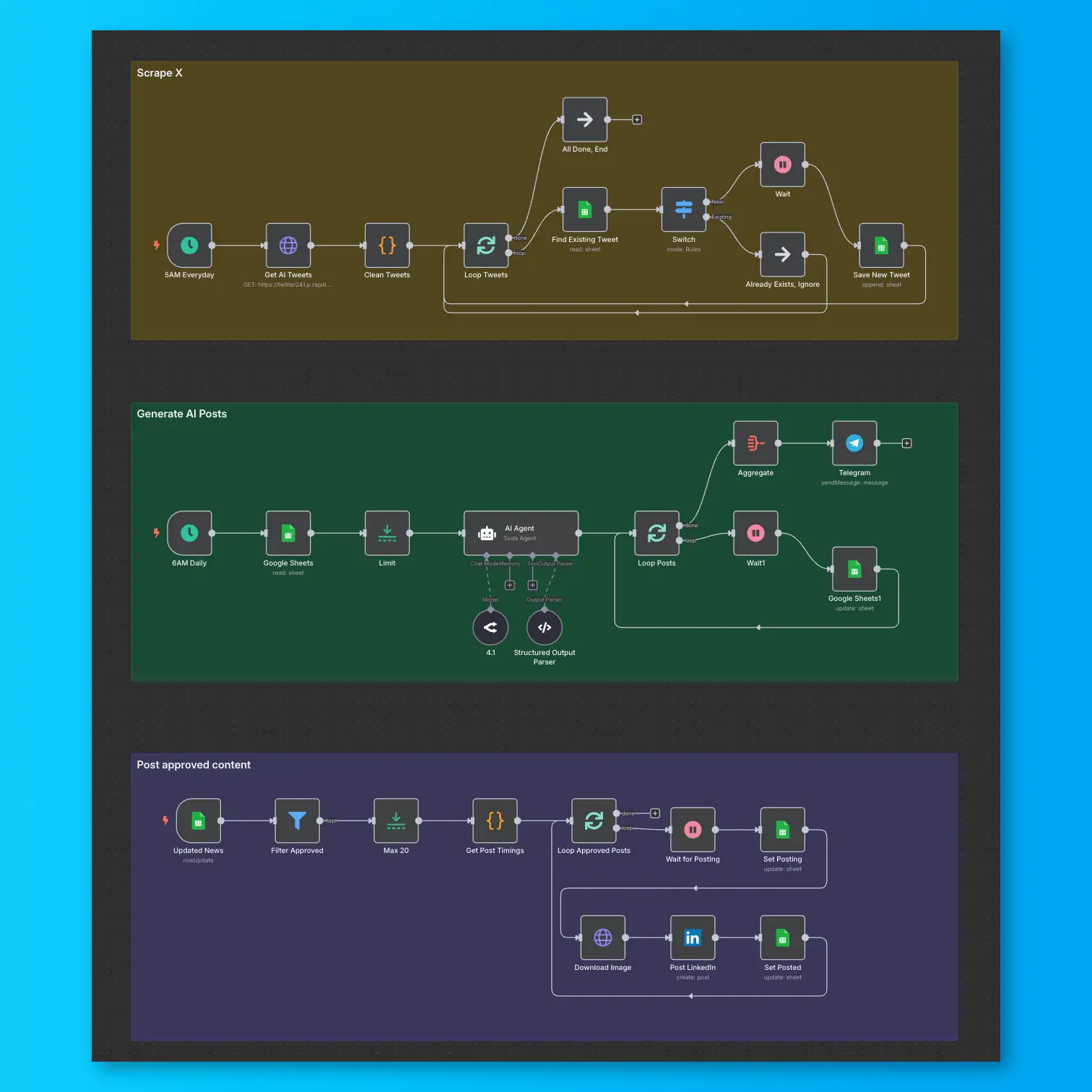
LinkedIn Automation From X Posts
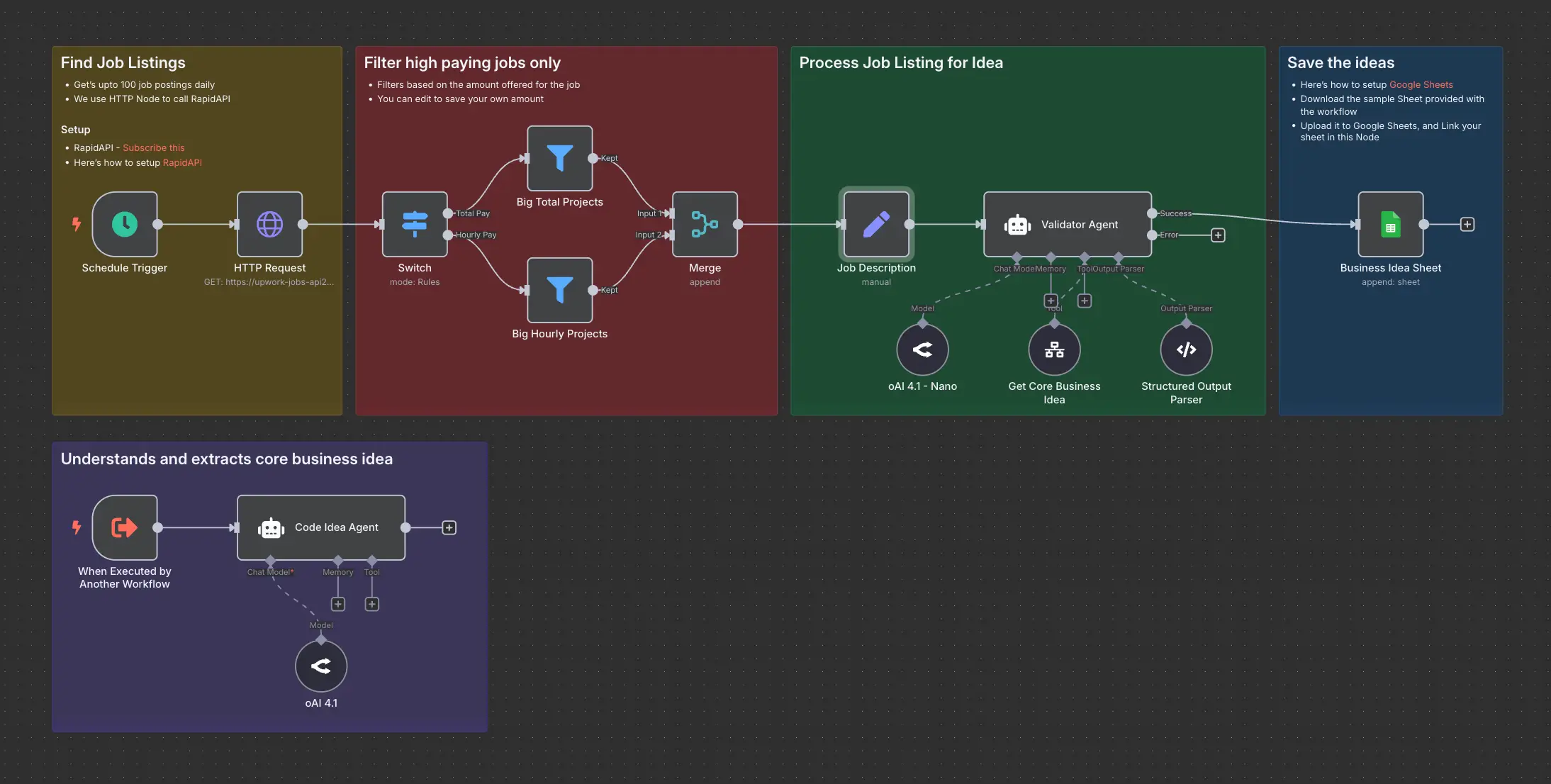
Daily Validated Business Ideas using n8n and Upwork