Why does the same customer show up in three Meta inboxes with no
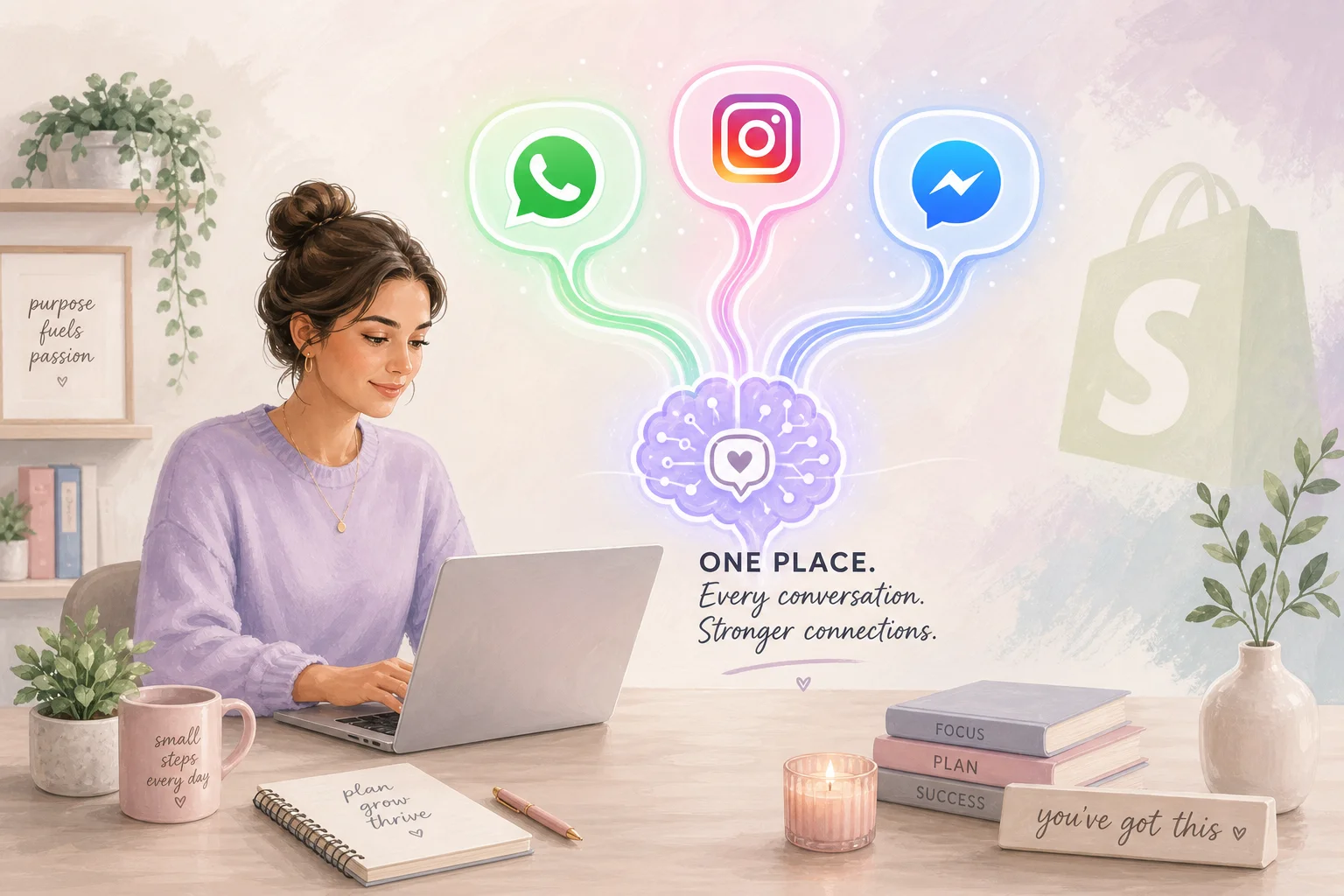

Table of Contents
- Introduction
- Why does the same customer show up in three Meta inboxes with no shared history?
- What is omnichannel customer messaging automation for a small business?
- Why does a SaaS unified inbox fail to unify social DMs?
- How does one agent core with three channel adapters work?
- What belongs in the agent brain for WhatsApp, Instagram, and Messenger?
- How do Meta Cloud API webhooks connect WhatsApp, Instagram, and Messenger?
- How do you stitch phone, IG handle, and order ID into one customer profile?
- How should you use n8n or Make without turning glue into Franken-ops?
- When should the agent hand off to a human instead of replying?
- How is Meta DM automation different from help desk and click-to-message ads?
- What is a phased rollout to unify social DMs for a small business?
- When should you book a roadmap call for journey leaks and Phase 1 channel?
- Frequently Asked Questions (FAQs)
Introduction
Your customer DMs you on Instagram about sizing, follows up on WhatsApp about shipping, then pings your Facebook Page when the box is late. From their side, it is one relationship. From yours, it is three threads with almost no shared history.
Shopify and your CRM already know the order, email, and phone. Meta inboxes do not talk to each other. So your team asks for the same details again: order number, size, shipping city. Customers feel unheard. Your people feel like copy-paste machines.
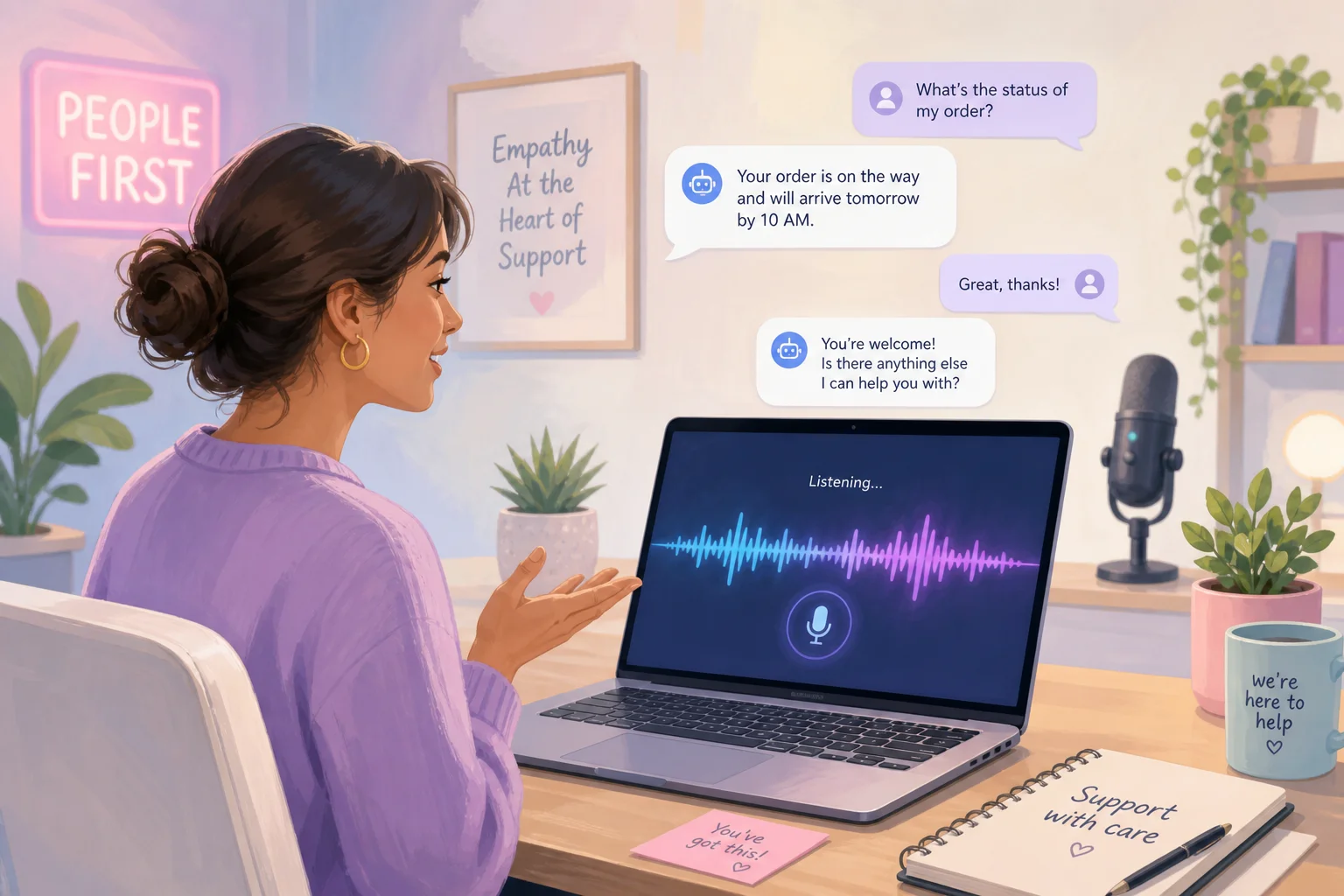
Omnichannel customer messaging automation does not have to mean another unified inbox subscription. You can build one custom agent brain - memory, policies, Shopify and CRM tools - and plug it into WhatsApp, Instagram, and Messenger through three thin channel adapters on the Meta Cloud API. Humans supervise; the agent handles repeat context work.
This guide is for owners and ops leads who want to unify social DMs for a small business without your team staying the integration layer between channels. It covers architecture, identity resolution, handoff queues, and a phased rollout. It is distinct from Claude customer support automation for help desk tickets and from paid click-to-message ad flows.
Before you add tools, map leaks with AI automation audit and readiness: what to map before you subscribe. When DMs compete with leads for the same calendar, use what to automate first: a revenue-first prioritization framework.
Why does the same customer show up in three Meta inboxes with no shared history?
The pattern is everywhere in growing D2C and service brands:
A shopper sees a Reel, DMs for sizing advice, later taps WhatsApp from your site footer, then messages the Facebook Page when tracking stalls. Each surface is a separate thread. Native Meta tools are built for manual replies, not for one customer record across channels.
Meanwhile expectations have shifted. People expect brands to remember prior chats. Quick, contextual answers drive satisfaction; repeating yourself destroys it. When agents re-ask basics that Shopify already holds, you are not just slow - you are leaking trust and revenue.
Under the hood, the real cost is glue work. Someone copies context from Instagram into a sheet, checks CRM, replies on WhatsApp, updates tags by hand. That is the same failure mode as form to CRM to spreadsheet to Slack: your team is the integration layer, and DMs are just the latest surface where salary replaces architecture.
What is omnichannel customer messaging automation for a small business?
For a small team, omnichannel customer messaging automation means one system that:
- Receives DMs from WhatsApp Business, Instagram Messaging, and Messenger via Meta webhooks
- Resolves who the customer is across identifiers
- Recalls prior conversations on any channel
- Answers routine intents with tools (order lookup, inventory, policies)
- Escalates edge cases to humans with full context
It is not a prettier inbox. It is a single reasoning layer with channel-specific pipes in and out. The agent core owns memory and decisions; adapters only translate Meta event formats.
That separation is what lets you add a fourth channel later (email, web chat) without rewriting business logic three times.
Why does a SaaS unified inbox fail to unify social DMs?
Unified inbox tools can help agents see multiple channels on one screen. They often stop there:
| What SaaS unified inbox usually does | What you still need |
|---|---|
| Merge threads in one UI | One customer identity across channels |
| Vendor-hosted AI add-ons | Your policies, tools, and audit trail |
| Ticket-style workflows | Journey memory and proactive context |
| Another subscription and data silo | Logic in systems you control |
You may still pay people to mentally link "@handle" on Instagram to a phone number on WhatsApp. You may still build zaps from the inbox into CRM while Shopify sits elsewhere.
A SaaS inbox can make daily work nicer. It rarely gives you one agent brain wired to your stack. If your goal is to unify social DMs for a small business with automation that matches your returns policy and catalog, treat Meta channels as dumb pipes into your own core.
How does one agent core with three channel adapters work?
Invert the usual setup. Instead of three separate bots, build:
Agent core (intelligence)
- Conversation memory keyed to customer, not channel
- Identity resolution and profile
- Brand voice and policy playbooks
- Tools: Shopify order lookup, CRM contact update, knowledge search
- Escalation rules
Channel adapters (thin)
- WhatsApp adapter: Cloud API webhooks in, formatted sends out (templates, session windows)
- Instagram adapter: Graph API messaging events and replies
- Messenger adapter: Page inbox webhooks and send API
Each adapter normalizes inbound events, calls the core, formats the reply for that surface. The core never needs to know WhatsApp template syntax; adapters handle channel quirks.
Customer -> Meta (WA / IG / Messenger) -> webhook -> adapter -> agent core -> tools (Shopify, CRM)
                                                      |
                                                      v
                                              human handoff queue
One place to change policy. Three mouths that share the same memory.
What belongs in the agent brain for WhatsApp, Instagram, and Messenger?
Memory across channels. Log messages with channel metadata under one customer ID. If sizing was discussed on Instagram, WhatsApp follow-ups can reference it without re-asking.
Policies and outcomes. Encode returns windows, discount rules, shipping delay language, and restricted items. Aim for outcomes (resolved order issue, qualified lead) not canned scripts only.
Tools. Typical Shopify-led stack:
- Order lookup by number, email, or phone
- Inventory by SKU and variant
- CRM history and tags
- Create or update contacts; issue discount codes within rules
Without tools, the model is an FAQ. With tools, it operates on real customer state - the same pattern as stop repeat support tickets: deflect 80% before you hire more, applied to social DMs.
Guardrails. Block or escalate chargebacks, legal threats, fraud signals, and low-confidence replies. Hybrid AI plus human is the durable model for 2026 service teams.
How do Meta Cloud API webhooks connect WhatsApp, Instagram, and Messenger?
Meta has consolidated business messaging under the Meta Cloud API. The pattern is consistent:
- Subscribe to webhooks for inbound messages and status events
- Receive payloads at your endpoint (or orchestrator)
- Process and respond via the channel send API
WhatsApp Business Platform uses session messages inside 24 hours after the user's last message; business-initiated outreach needs approved templates.
Instagram Messaging covers DMs and story replies on business accounts via the Graph API.
Messenger handles Page inbox conversations, including many click-to-message ad entry points.
You can host one webhook receiver, normalize events to a common schema, and route everything to the same agent core with a channel field. Meta handles delivery infrastructure; you own journey logic.
How do you stitch phone, IG handle, and order ID into one customer profile?
Identity resolution is what makes omnichannel feel real.
Collect hints in flow. When needed, ask once: email used at checkout, phone for WhatsApp updates, IG handle if they messaged before.
Use Shopify and CRM as source of truth. Match new conversations to existing records when email, phone, or order ID aligns.
Link deterministically. Store multiple identifiers on one customer row: WhatsApp number, Instagram scoped ID, Messenger PSID, email, Shopify customer ID.
Stay conservative on fuzzy merges. Wrong merges hurt more than asking one clarifying question. Use weak signals as suggestions; require strong matches before auto-merging.
Once linked, the core pulls order history and prior DM topics before drafting - the opposite of three agents re-typing the same five conversations.
How should you use n8n or Make without turning glue into Franken-ops?
Most teams orchestrate with n8n or Make:
- Ingest Meta webhooks
- Transform payloads
- Call your agent API (e.g., Claude with structured tools)
- Invoke Shopify or CRM nodes
- Log to a database; push escalations to Slack or your help desk
The rule: orchestration is plumbing, not the brain. Business logic and memory live in the agent core you control. Flows should be boring pipes that are easy to clone when you add channel two.
That mirrors Meta leads CRM automation with HubSpot and n8n webhooks and HubSpot to Google Sheets sync: move data with automation tools, but do not let zap spaghetti become your product.
When should the agent hand off to a human instead of replying?
Even a strong core should not own every thread. Escalate when:
- Sentiment is angry or the customer threatens churn
- Policy is ambiguous (warranty edge cases, partial refunds)
- Logistics are exceptional (lost high-value shipment)
- The agent fails twice on the same intent
Handoff should create a ticket or Slack item with full cross-channel transcript, customer profile, orders, and what the agent already tried. Humans reply in the help desk or approve agent drafts - same approve-before-send discipline as Claude customer support automation.
Humans become VIP problem solvers, not first-line typists. Corrections feed back into policies and knowledge so repeat DM questions shrink over time.
How is Meta DM automation different from help desk and click-to-message ads?
Boundaries keep your roadmap honest:
- Not the click-to-message ads D2C play (paid taps into DMs for conversion). This article covers ongoing organic and mixed conversations across Meta surfaces.
- Not the Facebook ads message automation team playbook alone - that aligns marketing and sales on ad-to-DM journeys; here we unify history regardless of entry point.
- Not help desk ticket automation (email, web forms). Social DMs have fuzzier identity, chatty tone, and Meta-specific template rules.
Social DMs are often high volume and low structure. They deserve a dedicated agent design, not a copy of email macros.
What is a phased rollout to unify social DMs for a small business?
Do not launch three channels at once. Phases reduce risk and teach you where identity breaks.
Phase 0 - Audit. Count weekly volume per channel. List top intents (WISMO, sizing, returns). Mark journey leaks where customers switch channels and context dies. Same discipline as what to automate first.
Phase 1 - One channel. Pick highest volume (often Instagram or WhatsApp). Ship agent core plus one adapter. Scope to order status, basic product Q&A, policies. Human handoff for everything else. Prove faster resolution without CSAT drop.
Phase 2 - Second adapter. Add webhook subscription and formatting for channel two. Reuse core, tools, and policies. Improve identity stitching with real transcripts.
Phase 3 - Third channel and reporting. Close the triangle. Track conversations per surface, handoff rate, resolution time, and revenue signals (coupon redemption, assisted checkout).
Each new surface is a thin adapter, not a new ops playbook. Paid click-to-message flows can land in the same brain later instead of a separate bot per campaign.
When should you book a roadmap call for journey leaks and Phase 1 channel?
If your team still copies DM context into sheets, re-asks order numbers across channels, and maintains parallel zaps nobody fully owns, you are paying integration tax on every conversation.
A /roadmap-call session maps that glue work explicitly - the same "team is the integration layer" pain as forms, CRM, and Slack, applied to Meta DMs. You leave with:
- A journey leak map across WhatsApp, Instagram, and Messenger
- A ranked choice for Phase 1 channel based on volume and revenue impact
- A minimal agent core blueprint: memory, tools, policies, handoff queue
- DIY vs build guidance before another inbox SaaS renewal
Your team should not be the integration layer. One agent brain, three adapters, and a phased build turn fragmented DMs into a compounding asset.
Frequently asked questions
Quick answers on the topics covered in this article.
It is one automated system that handles customer DMs across channels with shared memory, policies, and tools (Shopify, CRM), instead of separate bots or agents re-asking the same questions in each inbox.
Build one agent core (memory, tools, escalation rules) and three thin adapters on the Meta Cloud API. Adapters normalize webhooks; the core reasons once and logs to your systems of record.
Each Meta surface stores its own thread. Without identity resolution and a shared agent memory, agents cannot see Instagram sizing chat when the same person writes on WhatsApp about shipping.
A unified inbox merges UI. One agent brain merges customer identity, history, policies, and tool access. UI unification alone still leaves your team mentally stitching channels together.
Pick the highest weekly volume and highest pain - often Instagram for pre-purchase questions or WhatsApp for post-purchase and international buyers. Prove value on one channel before adding adapters.
Collect email, phone, or order ID when needed; match deterministically to Shopify and CRM records; store WhatsApp number, IG scoped ID, and Messenger PSID on one customer profile. Avoid aggressive fuzzy merges.
Yes, as orchestration: webhooks in, agent API call, Shopify or CRM nodes, logging, Slack or help desk escalation. Keep business logic in the agent core, not scattered across dozens of fragile zaps.
Escalate on legal or fraud topics, high churn risk, repeated agent failure, or policy exceptions. Pass full cross-channel context so humans never start from zero.
Help desk automation targets email and web tickets in Zendesk-style tools. Meta DM automation handles WhatsApp, Instagram, and Messenger APIs, identity fuzzier than email, and channel-specific send rules.
Rough weekly DM volume per channel, top five question types, where context drops when customers switch apps, and which systems hold truth today (Shopify, CRM, sheets). That feeds a Phase 1 channel pick and leak map.
Share this article
Related workflows
LinkedIn Automation From X Posts
Daily Validated Business Ideas using n8n and Upwork