OWL vs Manus AI: Open-Source Battle


Table of Contents
- Introduction
- 🦉 What is OWL?
- 🚀 Key Features of OWL
- 🆚 OWL vs. Manus AI — How Do They Compare?
- 🌍 OWL's Role in the Open-Source AI Ecosystem
- 🌟 Why OWL is a Game-Changer for AI Research & Automation
- 🤔 Frequently Asked Questions (FAQs)
- 🔎 Final Thoughts – Is OWL the Future of Open-Source AI?
Introduction
Artificial intelligence (AI) has grown beyond simple automation tools to complex multi-agent systems capable of executing human-like workflows. In this article, we'll explore OWL, an open-source AI framework from the Camel AI project, and how it serves as an alternative to Manus AI, a proprietary AI with a reported higher benchmark performance. Whether you're a developer, researcher, or entrepreneur, understanding the strengths and trade-offs between these two AI technologies can help you choose the best solution for your needs.
🦉 What is OWL?
Open-Source AI with a Focus on Collaboration
OWL (Optimized Workforce Learning) is an open-source AI system developed under the Camel AI project. This framework is designed for multi-agent collaboration, meaning it allows multiple AI agents to work together, autonomously handling complex tasks.
OWL is unique because it builds on the CAMEL-AI infrastructure, which focuses on scalable agent cooperation, optimizing how AI systems interact and solve real-world problems. It has already proven its capabilities in the GAIA benchmark, scoring 58.18%, making it one of the top-performing open-source AI systems.
📌 Key Takeaway: OWL isn't just another AI model—it's a framework for intelligent multi-agent collaboration, making it highly adaptable for users who need modifiable AI solutions.
🚀 Key Features of OWL
OWL is packed with features that make it a powerful AI multitool. Here's what stands out:
📊 1. GAIA Benchmark Excellence
OWL is one of the best-performing open-source AI systems on the GAIA benchmark (General AI Assistant benchmark). While not the highest in the ranking, its 58.18% score places it well among other AI agents, proving its robustness in handling real-world tasks.
🔥 2. Multi-Agent AI Capabilities
Unlike basic AI models, OWL enables multiple AI agents to collaborate in solving tasks. This cooperation allows for:
- Task delegation (specific agents handle certain operations)
- Parallel execution for efficiency
- Contextual learning (agents share knowledge for better decision-making)
👀 3. Advanced Toolkits for Real-World Applications
OWL is highly modular, integrating with essential tools for automation:
- Browser Automation (Similar to Selenium)
- Video & Image Processing (AI-powered recognition)
- Document Parsing (Supports Word, Excel, PDF)
- Code Execution (For AI-driven programming tasks)
- Weather, Maps, and Search Toolkits (Gather real-time data)
This makes OWL useful for data analysts, researchers, developers, and businesses looking for AI-powered automation.
🛠 4. Flexible Installation & Compatibility
You can install OWL using Python 3.10–3.12 via:
uv(recommended)venv+pipconda
It also supports Docker deployment, making it easy to integrate into existing AI workflows.
📌 Key Takeaway: OWL is highly extensible, allowing custom deployment and integration with various toolkits, making it a versatile open-source AI solution.
🆚 OWL vs. Manus AI — How Do They Compare?
🔒 Manus AI – The Proprietary Alternative
Manus AI, launched on March 6, 2025, is a commercial AI agent known for its high GAIA benchmark scores. According to reports, it has achieved:
- 86.5% on Level 1
- 70.1% on Level 2
- 57.7% on Level 3
Despite its performance advantages, Manus AI is closed-source, meaning users are locked into the proprietary system without access to modify or contribute to the model.
📊 Performance Differences
| Feature | OWL (Camel AI) | Manus AI |
|---|---|---|
| GAIA Benchmark Score | 58.18% (Top Open-Source) | 65%+ (Proprietary) |
| Multi-Agent Support | ✅ Yes | ✅ Yes |
| Open-Source | ✅ Yes (Apache 2.0 Licensed) | ❌ No |
| Customization | ✅ Yes | ❌ Limited |
| Community Collaboration | ✅ Yes | ❌ No |
| Requires API Keys | ✅ Minimal (OpenAI, Google, etc.) | ✅ Yes (Closed infrastructure) |
🧩 Open-Source vs. Proprietary Trade-Offs
While Manus AI scores higher on GAIA, its closed ecosystem and lack of modifiability could turn off developers looking for custom solutions.
OWL, on the other hand, fosters community-driven AI development, making it ideal for:
✅ Open-source enthusiasts
✅ Academic researchers
✅ Startups needing customizable AI tools
✅ Developers who want to modify AI behavior
📌 Key Takeaway: If you need a plug-and-play AI agent, Manus AI might be better. But if customization, flexibility, and open-source collaboration are your priorities, OWL wins.
🌍 OWL's Role in the Open-Source AI Ecosystem
🛠 GitHub & Community Contributions
Since OWL is open-source, anyone can contribute to its codebase via its GitHub repository. The Apache 2.0 license ensures:
- Free and unrestricted use
- Transparency in development
- Collaborative improvements by the community
📢 Community Engagement & Support
Users can get involved in the project via:
- Camel AI Discord – Community support & discussions
- WeChat Groups – China-based dev community
- Contribution Guidelines
📌 This means OWL is actively evolving, thanks to a growing global community.
🌟 Why OWL is a Game-Changer for AI Research & Automation
📢 Cost-Free & Accessible
Since OWL is free, any developer can use it without expensive licensing. This is huge for startups and researchers with budget constraints.
🛠 Highly Modifiable
With OWL, you can:
- Fine-tune AI agents
- Integrate new toolkits
- Customize workflows based on specific needs
Manus AI, by contrast, doesn't offer this level of flexibility.
🚀 A Step Forward for Open AI Development
OWL's openness challenges the proprietary dominance of AI systems like Manus AI. It proves that open-source AI can perform competitively, paving the way for future community-led innovations.
🤔 Frequently Asked Questions (FAQs)
Is OWL completely free to use?
Yes! OWL is open-source under the Apache 2.0 license, meaning anyone can use, modify, and contribute to it.
Can OWL replace Manus AI?
It depends on your needs. If you want top-tier AI performance, Manus AI might be better. But if you need a cost-effective, customizable, and community-driven alternative, OWL is a great choice.
What tools can OWL integrate with?
OWL supports browsers, databases, code execution, image/video/audio processing, document parsing, real-time search, and weather data integrations.
🔎 Final Thoughts – Is OWL the Future of Open-Source AI?
While Manus AI dominates performance benchmarks, OWL is revolutionizing multi-agent AI for open-source enthusiasts, startups, and developers.
If you're looking for a community-driven AI alternative with full customization, OWL is worth exploring.
Ready to dive in?
👉 Check out OWL on GitHub: GitHub Repo
🚀 The future of AI belongs to open-source innovation—and OWL might just be leading the charge!
Share this article
Related workflows
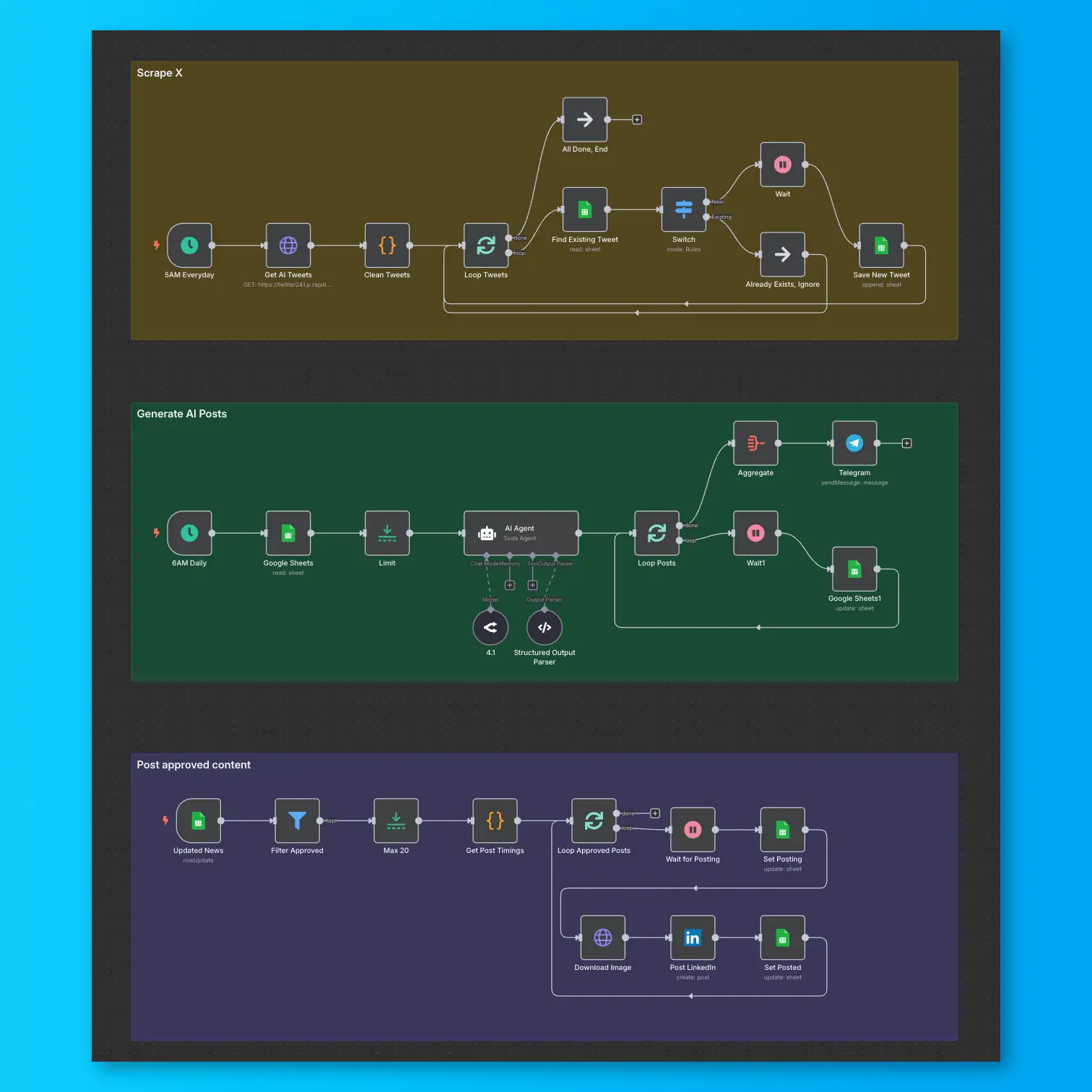
LinkedIn Automation From X Posts
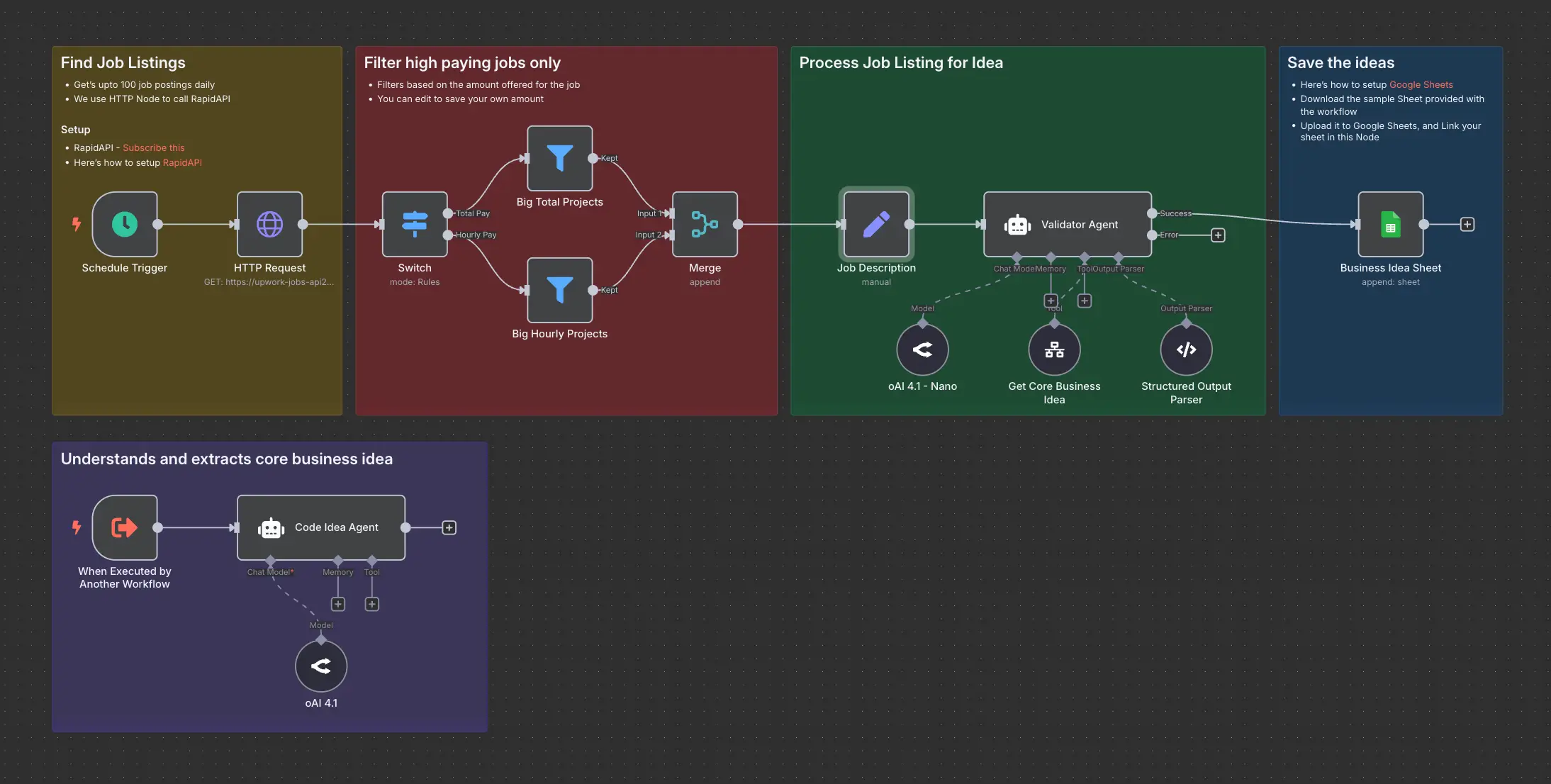
Daily Validated Business Ideas using n8n and Upwork