Claude Opus 5 at Opus 4.8 Price: Which Automations Deserve It? (2026)
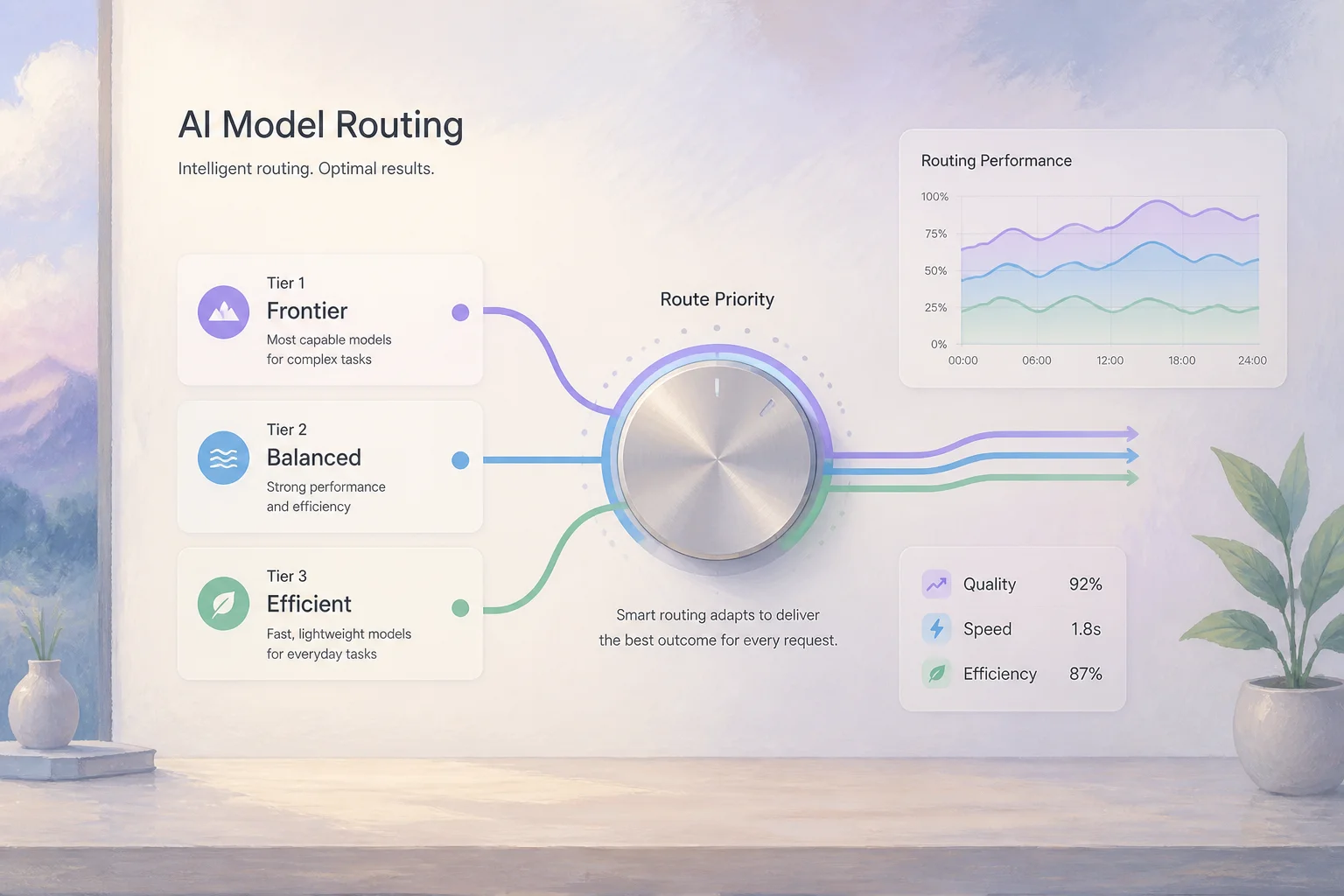

Table of Contents
- Introduction
- What changed with Claude Opus 5 and what does it cost?
- How does the Claude Opus 5 effort dial work for business automation?
- Why do teams overpay for frontier models or underpower agents that stall?
- How should small businesses route AI models for CRM updates?
- When should multi-step agents use Opus 5 vs Sonnet 5?
- How do you route coding assistants between Opus 5, Sonnet 5, and Haiku?
- What is Claude Sonnet 5 intro pricing and how does it affect routing?
- How do Opus 5 Fast mode and automatic fallbacks fit into your stack?
- What should your first 30 days of Claude Opus 5 routing look like?
- Frequently Asked Questions (FAQs)
Introduction
On July 24, 2026, Anthropic introduced Claude Opus 5 as its new flagship model - and the pricing headline is what budget owners should notice first. Opus 5 ships at $5 per million input tokens and $25 per million output tokens, the same rate as Opus 4.8. You are not paying more per token for the upgrade. You are paying more when you leave Opus 5 running on work that Sonnet 5 or Haiku could handle, or when you crank the new effort dial to xhigh or max on every call.
That combination changes the math for small-business automation. Near Fable 5-level intelligence at Opus-tier pricing sounds like a free lunch until you realize most teams still route everything through one model. Some workflows get frontier power they do not need. Others stall because a mid-tier model cannot hold a multi-step agent together. The fix is not picking a single winner. It is AI model routing - matching each CRM update, agent step, and coding task to the right tier and effort level.
This post is a practical routing guide for Claude Opus 5 business use: what the launch actually includes, where the effort dial earns its cost, when Sonnet 5 intro pricing through August 31 changes the default, and how to rank your flows before you scale spend. If you want the broader case for why one-model stacks fail, start with why one AI model quietly breaks your business automations. If you are comparing against Fable 5 at 2x Opus pricing, see Claude Fable 5 pricing worth it vs Opus 4.8.
What changed with Claude Opus 5 and what does it cost?
Claude Opus 5 is Anthropic's July 2026 flagship, positioned as a successor to Opus 4.8 with stronger reasoning, tool use, and long-context performance at unchanged base API pricing. Independent coverage and Anthropic's own materials describe it as approaching Fable 5-class intelligence on hard tasks while staying on the Opus price sheet - a meaningful shift from the June Fable 5 launch, where the premium model cost twice as much.
Here is the July 2026 pricing picture for the models most small teams actually route between:
| Model | Input (per 1M tokens) | Output (per 1M tokens) | Notes |
|---|---|---|---|
| Claude Opus 5 (standard) | $5 | $25 | Same as Opus 4.8 |
| Claude Opus 5 (Fast mode) | $10 | $50 | ~2.5x speed, 2x price |
| Claude Sonnet 5 (intro through Aug 31) | $2 | $10 | ~60% below Opus |
| Claude Sonnet 5 (standard from Sep 1) | $3 | $15 | Still ~40% below Opus |
| Claude Haiku (current gen) | Lower tier | Lower tier | Best for micro-tasks |
Fast mode is the other headline. Anthropic positions it for interactive workloads - in-app copilots, live support tools, IDE assistants - where users feel every second of latency. At 2.5x speed for 2x price, it is rational only when user time or conversion is worth more than the marginal token cost. Batch overnight jobs should stay on standard speed.
New infrastructure features matter as much as raw intelligence for production automations. Automatic API fallbacks help agents survive transient errors without hard-failing a customer-facing flow. Mid-conversation tool changes (beta) let an agent swap tools as context shifts - useful when a CRM conversation moves from "log this call" to "reconcile billing across two systems." Neither feature replaces routing discipline, but both make tiered stacks more reliable once you stop sending every task to one model.
How does the Claude Opus 5 effort dial work for business automation?
The effort dial lets you trade latency and cost for deeper reasoning on difficult steps. Anthropic exposes settings such as high, xhigh, and max - higher effort generally means the model spends more compute thinking through branches and edge cases before responding.
For business automation, the effort dial is not a "turn it up everywhere" knob. It is a per-step escalation control inside an otherwise cheaper pipeline. A sensible pattern looks like this:
- Classify the incoming request on Haiku or Sonnet at default effort.
- Execute routine CRM or draft work on Sonnet 5 at default effort.
- Escalate only the hard step - reconciliation, contract interpretation, multi-system merge - to Opus 5 at
highorxhigh. - Reserve
maxfor rare, high-stakes runs where a wrong answer has material cost and humans will not review every token.
The mistake is leaving effort on max for classification, note-taking, and template fills. You pay frontier prices for thinking the task never needed. The win is surgical: same Opus 5 model, but you only buy deep reasoning where it changes outcomes.
If your stack already handles Fable 5 refusal fallbacks to Opus 4.8, read Claude Fable 5 refusal and Opus 4.8 fallback risk before mixing effort escalation with automatic model fallbacks. You want logging on both stop_reason and which model actually served the request.
Why do teams overpay for frontier models or underpower agents that stall?
Teams overpay when they upgrade the model instead of upgrading the routing layer. Opus 5 at Opus 4.8 pricing removes the old excuse of "we cannot afford the new flagship," which makes it tempting to default everything to Opus 5. The bill still scales with volume. An inbox that drafts 8,000 replies a month and a classifier that tags 30,000 messages will dominate spend whether you label the model Opus 4.8 or Opus 5. If those jobs ran fine on Sonnet, you are paying frontier rates for output a reviewer cannot distinguish from a mid-tier draft.
Teams underpower agents when they lock complex workflows to Sonnet or Haiku to save money, then wonder why the agent loops, asks endless clarifying questions, or produces shallow recommendations. Multi-step CRM sequences that span CRM, billing, and support tools; coding agents that touch production services; executive summaries over messy quarter-long threads - these are where under-modeling shows up as stalled agents, not as a clean error message.
Both failure modes share one root cause: one model for every task type. Routing fixes the symmetry. You are not choosing between "cheap and broken" and "expensive and perfect." You are choosing per workflow, and often per step within a workflow.
How should small businesses route AI models for CRM updates?
Most CRM updates should run on Sonnet 5 or Haiku, not Opus 5. Reserve Opus for steps where misclassification or weak synthesis could change revenue, compliance, or customer trust.
Use this starting matrix for CRM automation routing. Treat it as a hypothesis to validate with your own logs, not a permanent rule.
| CRM task | Default model | Effort | Escalate to Opus 5 when |
|---|---|---|---|
| Log call / update stage from short note | Haiku | default | Ambiguous stage rules or multi-object updates |
| Summarize last 3 interactions into CRM fields | Sonnet 5 | default | Long cross-channel history or legal-sensitive notes |
| Lead qualification score + routing | Sonnet 5 | default | Enterprise deals with custom scoring logic |
| Multi-system reconciliation (CRM + billing + support) | Opus 5 | high/xhigh | Always - this is a frontier job |
| Executive pipeline narrative / forecast brief | Opus 5 | high | Leadership will act on the output without review |
Micro-updates - parsing a two-line email, moving a deal stage, appending a call note - are structurally simple and easy to roll back. Haiku is usually enough. If quality holds after a week of spot checks, keep it there.
Standard agent work - "read this thread, update fields, draft a follow-up" - is Sonnet 5 territory, especially while intro pricing at $2/$10 per million tokens lasts through August 31, 2026. That is the window to migrate medium-complexity CRM agents off Opus without giving up reliability.
Opus 5 earns its place on reconciliation, forecasting, and any step where a subtle misread propagates downstream. Pair those steps with high effort, not default, because you are paying for depth on purpose.
When should multi-step agents use Opus 5 vs Sonnet 5?
Sonnet 5 should execute most multi-step agent chains; Opus 5 should own the steps where errors compound across tools. The difference is not "how many steps" but "how costly is a wrong intermediate decision."
Sonnet 5 is explicitly positioned as a cheaper way to run agents at scale. For chains like lookup contact, pull recent tickets, draft personalized follow-up, update opportunity stage - Sonnet 5 during the intro window is often the right default. Moving those flows from Opus cuts token cost by roughly 60% while keeping stall rates low on well-bounded tasks.
Move a step to Opus 5 when you see consistent failure modes on Sonnet: repeated tool loops, incomplete merges across systems, recommendations that ignore constraints you put in the system prompt, or context drops on longer threads. Mid-conversation tool changes (beta) help here - an orchestrator can start on Sonnet with CRM tools, detect rising complexity, swap to Opus with higher effort for one turn, then drop back.
Escalation logic you can implement in n8n, Make, or a thin routing service:
1. Haiku classifies intent + risk tier
2. Low risk -> Sonnet executes full chain
3. High risk OR Sonnet retry count > 1 -> Opus 5 (effort: high)
4. User-facing copilot with SLA -> Opus 5 Fast mode (subset of users only)
Log model, effort, latency_ms, retry_count, and a human thumbs_up/down on outputs. After two weeks you will know which steps actually needed Opus - many teams find it is under 15% of agent turns.
How do you route coding assistants between Opus 5, Sonnet 5, and Haiku?
Default coding assistance to Sonnet 5; escalate to Opus 5 for multi-file refactors, production-touching agents, and tasks where a subtle bug is expensive to unwind. Haiku is rarely right for code generation, but fine for tiny transformations when a human reviews every diff.
| Coding task | Default model | Notes |
|---|---|---|
| Single-function edit, test fix, boilerplate | Sonnet 5 | Review in PR as usual |
| Multi-file refactor, migration, cross-service change | Opus 5 | Use high effort; narrow scope |
| Autonomous agent modifying prod without tight review | Opus 5 | Treat as high risk; add tests |
| Lint/format/extract symbol renames | Haiku | Only if output is mechanical |
Fast mode is worth A/B testing for developers who live in the IDE all day. Doubling token cost can still win if it keeps senior engineers in flow during interactive sessions. Leave batch codegen and CI-assisted refactors on standard speed.
Near Fable 5 intelligence at Opus pricing narrows the gap for hard coding tasks, but it does not eliminate review. The routing question is whether Opus 5 reduces rework enough to justify its use on a given task - not whether it can write code at all.
What is Claude Sonnet 5 intro pricing and how does it affect routing?
Claude Sonnet 5 launched June 30, 2026 at $2/$10 per million tokens through August 31, 2026, then moves to $3/$15 on September 1. That intro window is the best time to shift high-volume agent and CRM work off Opus 5 without waiting for quality tradeoffs to appear in production.
Plan budgets using September standard pricing, not July intro rates. Teams that scale agents only because Sonnet is temporarily cheap often get surprised when September bills jump 50% on the Sonnet line item. Intro pricing is a migration accelerator, not a permanent baseline.
Even at $3/$15, Sonnet 5 remains meaningfully cheaper than Opus 5 at $5/$25. The durable strategy is unchanged: Sonnet for the bulk, Opus for the hard slice, Haiku for mechanical volume. The intro window just makes the migration cheaper while you prove routing rules.
| Period | Sonnet 5 | Opus 5 | Savings vs Opus (input/output) |
|---|---|---|---|
| Through Aug 31, 2026 | $2 / $10 | $5 / $25 | ~60% |
| From Sep 1, 2026 | $3 / $15 | $5 / $25 | ~40% |
How do Opus 5 Fast mode and automatic fallbacks fit into your stack?
Use Fast mode only on latency-sensitive, human-waiting surfaces; use automatic fallbacks as resilience, not as a substitute for tiered routing. They solve different problems.
Fast mode (~2.5x speed, 2x price) fits sales copilots, support sidebars, and live customer chat where responsiveness affects conversion or handle time. It does not fit overnight report generation, batch enrichment, or low-priority internal tools. Feature-flag Fast mode to a cohort first; compare satisfaction scores against marginal spend.
Automatic API fallbacks reduce hard failures when Anthropic or your network hiccups. Configure your router to log fallback events and alert when fallback rates spike - a rising fallback graph sometimes means you are hitting capacity or sending malformed requests, not just weathering blips.
Combine fallbacks with deliberate downgrade paths: if Opus 5 fails, retry a narrower Sonnet prompt before paging a human. If Sonnet stalls twice, escalate that turn to Opus with higher effort rather than looping forever. That pattern costs less than running Opus on every turn "just in case."
What should your first 30 days of Claude Opus 5 routing look like?
Start by ranking flows by revenue impact, then assign a model tier per step - do not start by enabling Opus 5 globally. If you have not prioritized which automations matter most, use what to automate first: revenue prioritization framework before you touch model settings.
Week 1: Inventory and baseline
- List every production LLM call: CRM, support, marketing, internal ops, coding.
- Tag each as micro / standard / complex / latency-sensitive.
- Record current model, average tokens per run, and monthly volume.
- Note stall patterns: loops, empty drafts, wrong-field updates.
Week 2: Route and migrate
- Move micro CRM updates to Haiku where quality holds.
- Move standard agents and drafts to Sonnet 5 (capitalize on intro pricing).
- Keep Opus 5 only on complex steps; set effort to
high, notmax, until telemetry proves otherwise. - Add logging:
model,effort,fast_mode,latency,outcome.
Week 3: Tune escalation
- For any step with Sonnet retry rate above your threshold, trial Opus 5 at
high. - A/B Fast mode on one high-traffic copilot; measure handle time and user ratings.
- Verify fallback and refusal logging if you also run Fable 5 anywhere in the stack.
Week 4: Budget and govern
- Reforecast spend at Sonnet $3/$15, not intro $2/$10.
- Document routing rules in one internal page (tiers, escalation, forbidden uses).
- Book a working session to re-rank flows if backlog changed - book a roadmap call if you want an external pass on which automations deserve Opus 5 versus Sonnet.
Daily checklist (5 minutes)
- Scan error and fallback rates by model tier.
- Review 3 random Opus 5 outputs: did they need frontier depth?
- Check for new high-volume calls still defaulting to Opus.
Weekly checklist (30 minutes)
- Compare cost per successful workflow vs prior week.
- Adjust one downgrade (Opus to Sonnet) and one upgrade (Sonnet to Opus) based on logs.
- Confirm September Sonnet pricing still fits the ROI story for each live agent.
Opus 5 at Opus 4.8 pricing is not permission to stop thinking about tokens. It is permission to use frontier depth where it was previously priced out - if you route everything else to Sonnet 5 and Haiku on purpose.
Frequently asked questions
Quick answers on the topics covered in this article.
Claude Opus 5 costs $5 per million input tokens and $25 per million output tokens - the same as Opus 4.8. The upgrade is capability and controls (effort dial, Fast mode, fallbacks), not a higher list price. Your bill still rises if you run more volume or use Fast mode at 2x price.
The effort dial (high, xhigh, max) trades latency and cost for deeper reasoning. Use max only on rare, high-stakes steps where a wrong answer is expensive and humans will not review every line - contract interpretation, multi-system reconciliation, or autonomous production changes. Default CRM and draft work should stay on Sonnet at standard effort.
Coverage describes Opus 5 as approaching near Fable 5 intelligence on hard tasks while staying at Opus-tier pricing. Fable 5 still targets the absolute hardest long-horizon work at 2x Opus cost. For most SMB automations, Opus 5 plus selective effort escalation replaces many Fable 5 use cases; see the Fable 5 vs Opus 4.8 pricing breakdown for when the 2x premium still wins.
Sonnet 5 launched June 30, 2026 at $2/$10 per million tokens through August 31, 2026. On September 1, it moves to $3/$15. Plan automation budgets at the September rate so intro pricing does not mask long-term ROI.
Use Fast mode when a human is waiting in real time - sales copilots, support sidebars, IDE assistants - and responsiveness is worth 2x token cost for ~2.5x speed. Do not enable Fast mode on batch jobs, overnight reports, or low-priority internal tools.
Route mechanical logging and single-field updates to Haiku, standard summarization and qualification to Sonnet 5, and multi-system reconciliation or executive forecasting to Opus 5 with higher effort. Escalate only steps where Sonnet stalls or misroutes in your logs.
Automatic API fallbacks help production agents survive transient API errors by rerouting or degrading gracefully instead of hard-failing. Log fallback events separately from your tiered routing rules - spikes often indicate request issues, not just network noise.
Anthropic offers mid-conversation tool changes in beta, allowing agents to swap tools as tasks evolve - for example, moving from a CRM update to a billing lookup in one thread. Pair this with model escalation so complex tool paths can step up to Opus 5 for a single turn.
Agents stall when the model lacks depth for the step complexity - long cross-system merges, ambiguous instructions, or compounding tool errors. Fix by narrowing scope, improving prompts, or escalating only the failing step to Opus 5 with high effort instead of running the entire chain on a frontier model.
Rank flows by revenue and risk using a prioritization framework, then assign Opus 5 to the highest-impact steps that still fail on Sonnet. Book a roadmap call if you want help scoring CRM, agent, and coding workflows before you scale token spend.
Share this article
Related workflows
Daily Validated Business Ideas using n8n and Upwork