When does Claude Fable 5 stop being free on June 23? (2026)


Table of Contents
- Introduction
- When does Claude Fable 5 stop being free on June 23?
- Why does the Fable 5 usage credits deadline matter for small teams?
- Which workflows should stay on Fable 5 after June 22?
- How do you build a Fable 5 routing matrix for June 2026 pricing?
- How should you handle Fable 5 refusals and Opus 4.8 fallbacks?
- When should you NOT adopt Fable 5 at paid rates?
- What is this week's checklist before Fable 5 usage credits start?
- How does Batch API change your Fable 5 cost math?
- Frequently Asked Questions (FAQs)
Introduction
If your team has been treating Claude Fable 5 as the default for "anything important" since Anthropic's June 9 launch, you have roughly one week left before that habit starts costing real money. Fable 5 is included at no extra charge on Pro, Max, Team, and seat-based Enterprise plans through June 22, 2026. On June 23, continued use in the Claude app, Claude Code, and Claude Cowork draws down usage credits at premium rates - roughly 2x Opus 4.8 at $10/$50 per million tokens for interactive work.
That is not a pricing trivia update. It is a routing deadline. Small teams that do nothing will wake up to the same workflows, the same model defaults, and a bill that reflects "Fable 5 everywhere" instead of "Fable 5 where it pays." This post is the decision sprint version: what changes on June 23, which workflows earn the premium after the free window, how to wire refusal fallbacks, when to skip Fable 5 entirely, and a concrete checklist to finish before the cliff. For the full cost-per-task breakdown, see Claude Fable 5 pricing: is the 2x over Opus 4.8 worth it?. For why model defaults quietly break automations, see why one AI model quietly breaks your business automations.
When does Claude Fable 5 stop being free on June 23?
Anthropic's launch terms are explicit. Fable 5 is bundled into subscription plans from launch through June 22, 2026. After that:
- Claude app experiences (web, desktop, Claude Code, Claude Cowork): Fable 5 usage consumes usage credits instead of riding inside your flat subscription.
- Claude API: there was never a free window.
claude-fable-5has been billed at full token rates since day one.
The paid rates for Claude Fable 5 pricing in June 2026 are:
| Usage mode | Input (per 1M tokens) | Output (per 1M tokens) | vs Opus 4.8 |
|---|---|---|---|
| Interactive / API | $10 | $50 | 2x |
| Batch API | $5 | $25 | 1x |
Opus 4.8 sits at $5/$25. Fable 5 also ships with a 1M-token context and up to 128k output, tuned for long-horizon, multi-step work - which often means more tokens per task, not just more expensive tokens. The product does not change on June 23. Your marginal cost per message does.
Why does the Fable 5 usage credits deadline matter for small teams?
The risky pattern looks familiar. Someone on the team discovers Fable 5 during the free window. It becomes the default for research, coding, support drafts, and "just this one hard thing." Nobody writes down which tasks actually need Mythos-class reasoning. On June 23, that enthusiasm turns into a 2x Opus line item across the org.
Fable 5 usage credits bite harder than a simple rate doubling because the model is built for long inputs and detailed outputs. A strategic memo that pulls in eight docs and three call transcripts is exactly what Fable 5 is good at - and exactly what burns context. Combine double the per-token rate with longer runs, and a five-person team can drift into hundreds or thousands of dollars a month without anyone approving a budget change.
This week is your last chance to experiment at zero marginal cost in chat while still measuring what those same tasks would cost on the API. If you wait until June 23, your invoice becomes your routing policy. That is backwards for teams with buying power who need predictable spend.
Which workflows should stay on Fable 5 after June 22?
Fable 5 earns paid rates on a narrow slice of work - usually the hardest 10 to 20 percent - not on everyday glue tasks. Keep it after June 22 when the quality lift changes a business outcome, not when it merely feels smarter.
Strong keep candidates:
- Strategic research and decision memos where you feed large report sets and need nuanced tradeoffs (market entry, vendor RFPs, pricing strategy).
- Financial and ops reviews that synthesize exports, cohort data, and leadership commentary into a narrative - one of Fable 5's clearest wins.
- Serious coding and migrations where a wrong refactor costs engineer-days; see also migrating off Fable 5 to Opus 4.8 without output drift if you need a rollback path.
- Multi-doc internal synthesis ("summarize these eight Notion pages and three QBRs into one brief").
- Long-horizon agentic runs where small per-step errors on cheaper models compound into failed jobs.
Downgrade candidates:
- Support reply drafts, ticket summaries, and routing notes (high volume, moderate stakes).
- Cold outbound and nurture copy at scale (Opus 4.8 usually nails it).
- Single-page summaries, spreadsheet help, and routine extraction.
- Anything you cannot tie to revenue, risk reduction, or hours saved.
The mental rule: Fable 5 is for the hardest work, not the busiest work.
How do you build a Fable 5 routing matrix for June 2026 pricing?
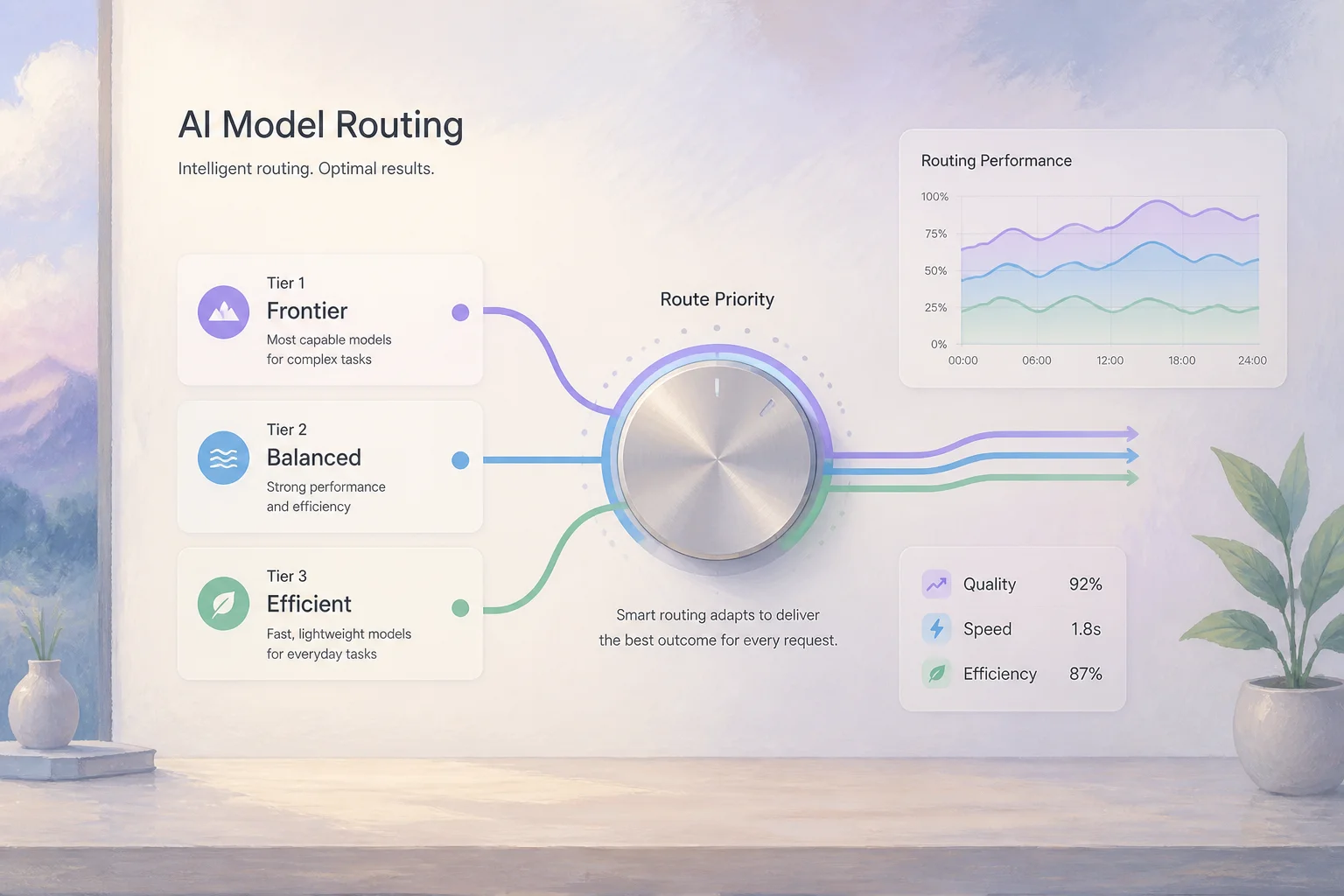
A routing matrix answers one question per workflow: what is the default model on June 23, and when do you escalate or fall back? Do not debate "Fable 5 yes or no" at the account level. Debate it per workflow.
| Workflow type | Default after June 22 | Escalate to Fable 5 when | Fallback |
|---|---|---|---|
| Ticket triage / intent routing | Haiku | Rarely | N/A |
| Support drafts, lead qualification | Sonnet or Opus 4.8 | Multi-system escalations only | Sonnet |
| Sales copy, nurture sequences | Opus 4.8 | Major launches, complex synthesis from many sources | Opus 4.8 |
| Monthly financial / RevOps review | Fable 5 | N/A | Opus 4.8 on refusal |
| Strategic research memos | Fable 5 | N/A | Opus 4.8 or human |
| Code refactors / migrations | Fable 5 for hard paths | N/A | Opus 4.8 for boilerplate |
| Bulk content or transcript processing | Batch Fable 5 | N/A | Batch Opus 4.8 |
Document three things in plain language for each row: default model, escalation trigger, and refusal path. Engineers need the model id. RevOps needs the cost cap. End users need "when am I allowed to pick Fable 5 in chat?"
If you are wiring this in n8n or similar, set per-node defaults now. Do not rely on "last used model" in a UI after June 22. Log model name, tokens, and estimated cost per run so you can refine the matrix with real data. For tier limits that affect how hard you can push automation traffic, review Fable 5 rate limits and tier access for small teams.
How should you handle Fable 5 refusals and Opus 4.8 fallbacks?
In chat, a refusal is annoying. In production, an unhandled refusal breaks the run - or worse, returns a different model's output without telling you. Fable 5 ships with safety classifiers that can refuse certain requests; in some paths the system can silently fall back to Opus 4.8. Your pipeline expected one model and one output shape. It got another.
Before June 23, treat refusals as normal control flow:
- Detect them explicitly - check
stop_reason, refusal patterns, and status codes; never assume success. - Define a fallback tree - for critical workflows: Fable 5 primary, Opus 4.8 on refusal, human on second failure.
- Decide surface vs auto-retry - internal analytics can auto-retry on Opus; customer-facing messaging may need a human.
This week, read and implement your refusal playbook, not next month when the first production job stalls. The full API-level breakdown is in Claude Fable 5 refusals and the silent Opus 4.8 fallback risk. Your routing matrix and refusal matrix should match: high-stakes flows get a multi-step tree; low-value automations can log and move on.
When should you NOT adopt Fable 5 at paid rates?
Some profiles should default away from Fable 5 on June 23, even if the team loves it in demos.
Skip paid Fable 5 when:
- Usage is almost all short, routine tasks - one-off emails, simple replies, single-page summaries. Opus 4.8 or Sonnet wins on cost with negligible quality loss.
- You lack per-workflow token visibility - if you cannot answer "what did we burn last week and on which flows?", do not lock in premium defaults. Instrument first, reintroduce Fable 5 with eyes open.
- Experiments have not graduated - "could we do X with AI?" is not the same as a workflow with ROI. Run focused Fable vs Opus comparisons this week; drop marginal wins.
- Compliance blocks the launch posture - no zero-data-retention option at launch and refusal-driven fallbacks may fail your bar for regulated data. Cost is not the only gate.
- Rate limits do not match your scale - if projected automation volume hits ceilings during peak hours, treat Fable 5 as spike capacity, not the default pipe. Batch or spread keys where appropriate.
The anti-pattern to avoid: one premium model everywhere. That is both a cost risk and an architecture risk - pricing changes, refusal behavior shifts, or capacity blips take down every workflow at once.
What is this week's checklist before Fable 5 usage credits start?
Use the remaining free days as a structured sprint, not open-ended play.
Monday-Tuesday: audit
- List every place the team uses Fable 5 in chat (ask leads, do not guess).
- Search configs and code for
claude-fable-5in API and automation stacks. - Bucket each use: research, analytics, coding, content, support, automation.
Wednesday: measure cost per task
- Run representative prompts through the API (or a gateway with token counts).
- Record input/output tokens; multiply by $10/$50 interactive or $5/$25 Batch.
- Repeat the same prompts on Opus 4.8 at $5/$25. Label each task downgrade, keep on Fable, or Batch candidate.
Thursday: lock the matrix
- Write defaults, escalation rules, and refusal paths per workflow.
- Set model defaults in orchestration tools; ban "whatever was last selected."
- Share one-page guidance: "Fable 5 for QBR synthesis, major migrations, and strategic memos. Opus for everything else."
Friday: communicate and book prioritization
- Tell the team the June 23 cutoff and the new defaults before they learn from a credit warning.
- If the list is long or stakes are high, get a second pair of eyes on ranking - that is what a 45-minute AI roadmap call is for: which workflows, if any, justify Fable 5 at paid rates, and what to route where so you capture upside without doubling spend on work that never needed the frontier.
How does Batch API change your Fable 5 cost math?
One lever many teams miss in the June 23 scramble: Batch API runs Fable 5 at half interactive price ($5/$25 per million tokens). It fits workloads that are similar, numerous, and not urgent - processing hundreds of transcripts, running the same analytics template across clients, bulk content migration.
Flag bulk jobs in your routing matrix this week. If a task can wait hours instead of seconds, Batch may let you keep Fable 5 intelligence without interactive sticker shock. For overnight backlog clearing patterns, see Claude Fable 5 Batch API for clearing backlogs overnight.
Interactive Fable 5 is for decisions you need now. Batch Fable 5 is for volume you can queue. Mixing them deliberately is how small teams avoid paying frontier prices on commodity runs.
Frequently asked questions
Quick answers on the topics covered in this article.
Fable 5 is included at no extra cost on Pro, Max, Team, and seat-based Enterprise plans through June 22, 2026. From June 23, continued use in the Claude app and related experiences draws down usage credits at premium rates. Plan for the cutoff unless Anthropic announces an extension.
No. API calls to claude-fable-5 have been billed at $10/$50 per million tokens since launch. The June 22/23 cliff applies to how Fable 5 is treated inside subscription plans in chat, Claude Code, and Claude Cowork.
Interactive Fable 5 is $10 per million input tokens and $50 per million output - roughly double Opus 4.8 at $5/$25. Because Fable 5 often uses longer context and produces longer answers on hard tasks, total per-task cost can exceed 2x unless prompts are tight.
Default to Opus 4.8 (or Sonnet/Haiku for simpler work) and escalate to Fable 5 only for defined high-value workflows: deep financial reviews, strategic research synthesis, large code migrations, and multi-doc briefs. Fable-first defaults are expensive and brittle.
Keep Fable 5 on low-volume, high-stakes, high-complexity work where errors are costly: long-horizon agents, multi-source research, financial narrative synthesis, and serious refactors. Downgrade high-volume support drafts, routing, and routine copy.
Treat refusals as first-class events: detect stop_reason and refusal patterns, log them, and route through a defined fallback (often Fable 5 to Opus 4.8 to human). Never assume every Fable 5 call returns usable output from the model you requested.
During the free chat window, run representative tasks through the API with token logging. Multiply input and output tokens by $10/$50 (interactive) or $5/$25 (Batch). Compare to Opus 4.8 on the same prompts to see cost and quality deltas per workflow.
Use Batch for many similar, non-urgent jobs - bulk transcript processing, repeated analytics templates, large content migrations - where you can tolerate queue latency. You get the same model at half the per-token price.
You do not have to remove it. Set clear rules: Fable 5 for complex, high-value work; Opus 4.8 for everyday tasks. Back the guidance with model defaults in tools and usage monitoring so enthusiasm does not become runaway spend after usage credits kick in.
Run a few concrete experiments this week on your most painful workflows - financial reviews, research syntheses, major migrations - and compare Fable 5 vs Opus 4.8 on outcomes and estimated cost. Set conservative defaults, document your routing matrix, and book a roadmap call if you need help prioritizing which workflows justify the premium.
Share this article
Related workflows
Daily Validated Business Ideas using n8n and Upwork