ChatGPT Ads Manager for SMBs: Buy Leads or Fix Follow-Up First?


Table of Contents
- Introduction
- What is the ChatGPT ads manager for small business and how do ChatGPT Go ads work in 2026?
- Why do leads leak between a ChatGPT ad click and your first human reply?
- Why should most small businesses fix follow-up before scaling ChatGPT Go ads spend?
- How do you know if you are ready to buy leads in ChatGPT Ads Manager?
- What does fixing follow-up first actually look like for a small business?
- When does ChatGPT Ads Manager belong on your roadmap right now?
- How can you test ChatGPT Go ads without burning budget?
- What is a 90-day roadmap from leaky follow-up to scalable ChatGPT demand?
- Should you buy ChatGPT ads now or fix follow-up first?
- Frequently Asked Questions (FAQs)
Introduction
If you run a small business, the new ChatGPT Ads Manager is probably sitting in your browser tabs, quietly asking for a credit card. It promises access to hundreds of millions of ChatGPT users, self-serve targeting, and a performance dashboard that feels familiar if you have ever run Google or Meta ads.
At the same time, your current leads may still be waiting hours for a reply after they fill out a form.
That tension - between the pull of ChatGPT Go ads 2026 and the reality of slow, leaky follow-up - is the real decision. Not "Should I try OpenAI ads?" but "Am I ready to scale demand, or will I just pay to leak it?"
This guide explains what the ChatGPT ads manager small business experience actually is, why founders rush to it, and how to decide whether to buy leads there now or fix owned capture and automation first. If you want help ranking buy-demand vs fix-leaks for your stack, book a roadmap call.
What is the ChatGPT ads manager for small business and how do ChatGPT Go ads work in 2026?
On January 16, 2026, OpenAI published its approach to advertising and expanding access.
On January 16, 2026, OpenAI published its approach to advertising and expanding access. The announcement laid out three pieces that matter for advertisers:
- ChatGPT Go, a lower-cost tier at about $8 per month.
- Ads on both Free and Go tiers, integrated into the ChatGPT experience as clearly labeled sponsored content.
- A path for businesses to reach users inside ChatGPT while people are already asking questions.
On May 5, 2026, OpenAI opened a self-serve ChatGPT Ads Manager at ads.openai.com. Any advertiser with a credit card can create campaigns, set budgets, choose audiences or contextual triggers, and track impressions, clicks, and conversions.
What makes ChatGPT Go ads 2026 different from a standard display buy is context. Users are mid-conversation, often signaling intent ("How do I find a bookkeeper near me?" "What is the best way to migrate off spreadsheet invoicing?"). Ads can align to those questions. The interaction is text-first, which matches how many small businesses actually sell: email, forms, messaging.
For a ChatGPT ads manager small business test, you do not need heavy creative production. You can target micro-niches, write copy in natural language, and reach people in a research mindset instead of a scroll mindset. That is why the platform feels like cheap discovery.
None of it changes what happens after the click.
Why do leads leak between a ChatGPT ad click and your first human reply?
Before you put money into ChatGPT Ads Manager, look honestly at your lead journey today.
For most small businesses it looks like this: prospect sees an offer, clicks to a landing page, fills a form or starts a chat, details land in an inbox or spreadsheet, and someone replies eventually.
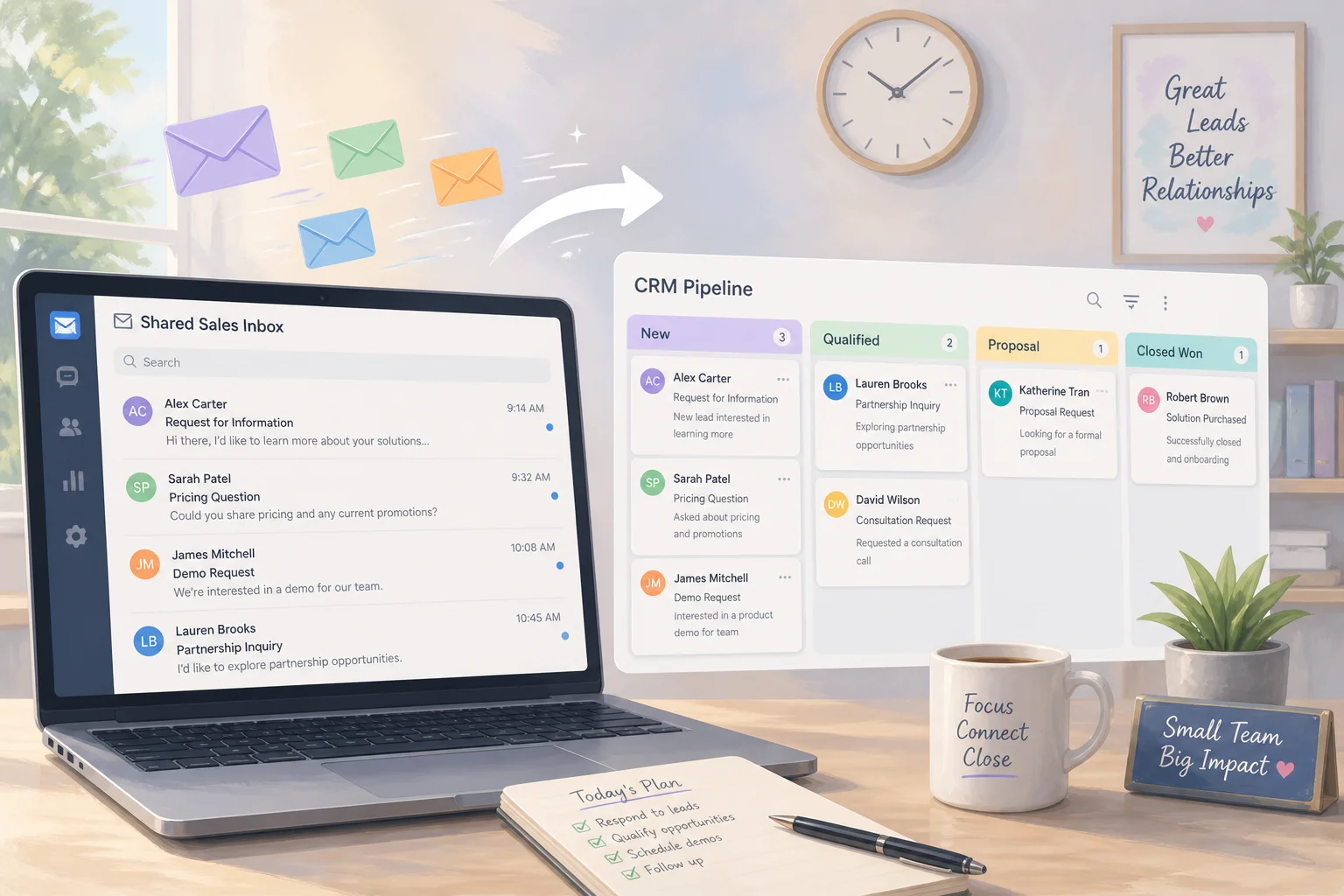
Every step is a leak. Slow pages. Forms that ask for too much. No confirmation the form worked. No automatic follow-up if they abandon halfway. No CRM, or a CRM that depends on manual retyping. Leads claimed in Slack or WhatsApp with no shared queue. Response times measured in hours.
If your current process is "forms go to a shared inbox, someone checks when they can, prospects wait until morning," then buying more leads from ChatGPT is like turning up the faucet when the sink is already overflowing.
The pattern is the same whether traffic comes from Google, Meta, referrals, or ChatGPT. For a deeper breakdown of why form leads go cold and how automation plugs the gap, see why leads go quiet after the form.
Why should most small businesses fix follow-up before scaling ChatGPT Go ads spend?
Follow-up improvements compound across every channel. Faster response, cleaner data, and better qualification lift organic search, referrals, existing paid ads, and email - not just ChatGPT.
Follow-up fixes also de-risk ad experiments. When every lead is contacted inside a set window and logged with a source tag, you can compare conversion by channel in days. You know whether to turn spend up or down.
When follow-up is inconsistent, any ChatGPT Go ads 2026 test produces noisy data. You might conclude ChatGPT ads do not work when the real problems are: 40% of leads never contacted, nobody filtered junk, nobody followed up after the first reply.
Fix the infrastructure first and ads become a volume dial on a system you already trust.
| Situation | Better first move |
|---|---|
| Slow or unknown time-to-first-reply | Fix capture + instant acknowledgement |
| Leads scattered across inboxes | One CRM with automatic logging |
| No source tracking | Tag every lead by channel before new spend |
| Profitable Google/Meta with fast follow-up | Small ChatGPT test is reasonable |
| High-LTV niche with clear ChatGPT questions | Pilot ads with tight budget + strict SLA |
How do you know if you are ready to buy leads in ChatGPT Ads Manager?
Walk through this diagnostic before you fund campaigns. Be honest.
What is your average time to first reply for new leads?
Could you show a timestamped report tomorrow? If you cannot consistently reply in under 15-30 minutes during business hours - or under five minutes with an AI-assisted first touch - response time is a bottleneck.
What percentage of leads receive no reply at all?
If you do not know, assume the number is worse than you think. Many teams see meaningful revenue gains just from contacting every lead at least once, before adding any new traffic.
Does every lead land in one CRM with automatic capture?
Does every inbound lead end up in a single source of truth with a source field (Google, Referral, ChatGPT Ads)? Is data populated automatically, or does someone retype from email?
Also check qualification and routing: consistent budget/timeline questions? Good leads routed to the right owner automatically? Nurture for leads not ready today?
If you answer "no" or "I don't know" to more than two of these, you will usually get better ROI fixing follow-up before scaling ChatGPT ads manager small business spend.
What does fixing follow-up first actually look like for a small business?
"Fix follow-up" sounds vague. In practice it means five upgrades: clean capture, centralized data, fast AI-assisted first response, lead scoring and routing, and basic nurture.
How do you clean capture before adding ChatGPT traffic?
Use one simple form per offer. Keep fields to essentials: name, contact, and three to five high-signal questions. Make the page fast and mobile-friendly.
Audit your current setup. Multiple forms posting to different inboxes, old forms on blog posts, and landing pages with inconsistent tracking are common leaks. Consolidate before you add ChatGPT traffic.
If click-to-message fits your business (WhatsApp, SMS, live chat), use it only when you can respond quickly. Slow DM replies waste ad spend on any platform; see click-to-message ads and slow DM replies.
How does AI-assisted first response work with n8n and your CRM?
AI shines at ensuring every new lead gets a helpful reply in under five minutes, 24/7, without replacing your sales team.
A typical pattern:
- Lead submits a form or starts a chat.
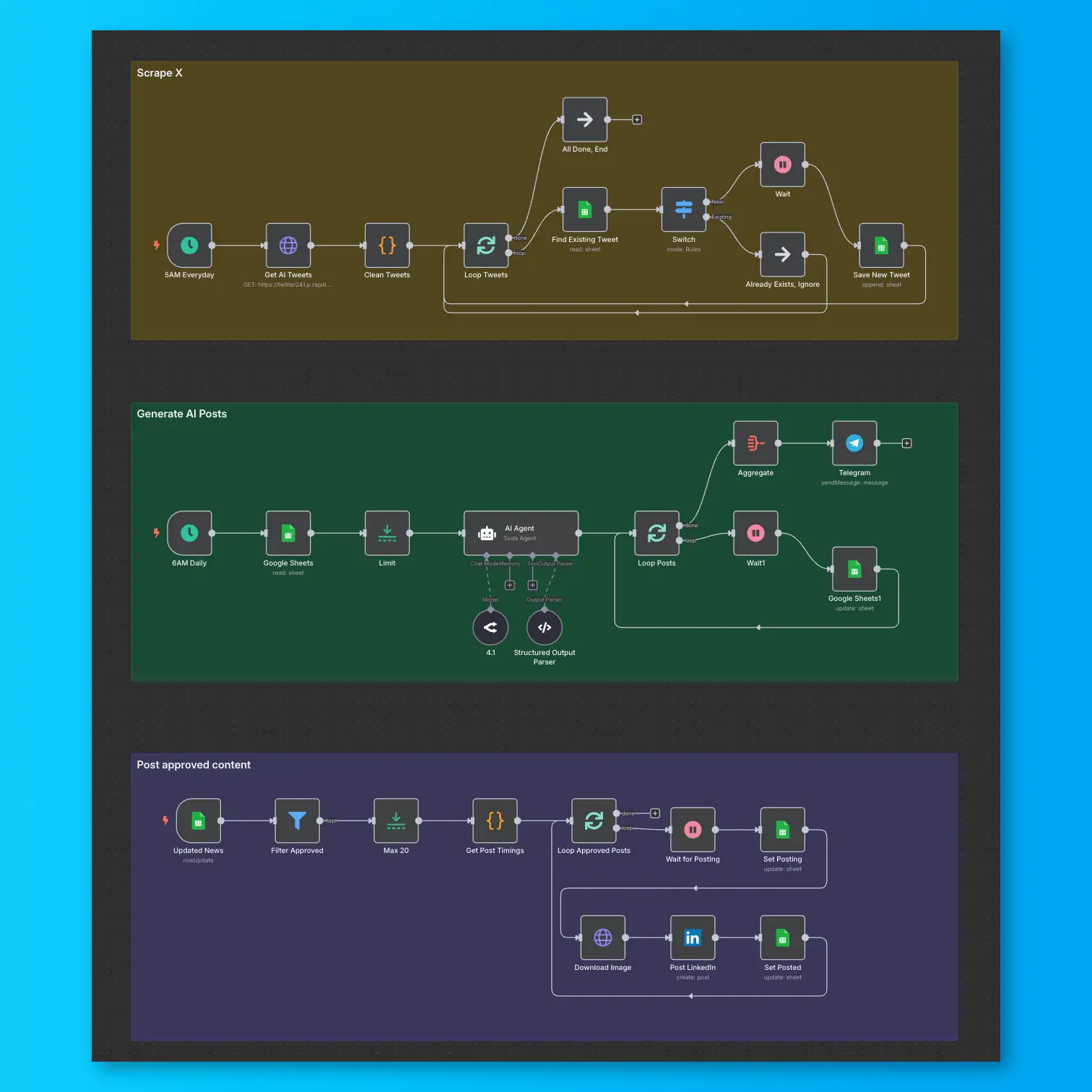
- Automation (via n8n) logs the lead in your CRM, sends a personalized acknowledgement, and asks one or two missing details (timeline, budget range).
- AI drafts a suggested reply for your rep with a summary, next actions, and a booking link.
Start with one high-impact process - lead triage - before expanding. For what to automate first in sales and marketing, see what to automate first.
How should you score and route ChatGPT ads leads?
Once capture and first reply are solid, add scoring: explicit signals (company size, budget, timeline) plus implicit signals (pages viewed, question answers, email engagement).
Typical routing:
- High score: instant Slack alert to the right rep plus calendar link.
- Medium score: email or SMS sequence with more context requests.
- Low score: polite redirect or resource, tagged for future nurture.
For a practical AI lead-scoring design with CRM routing, see AI lead scoring for small business.
Build minimal nurture too: 24-hour, 7-day, and 30-day check-ins for leads who do not book. Map lifecycle stages (new, engaged, opportunity, customer) with at least one touchpoint each.
When does ChatGPT Ads Manager belong on your roadmap right now?
Once follow-up foundations are in place, ChatGPT Ads Manager gets more interesting. Three cases where early ChatGPT Go ads 2026 tests make sense:
You have a clearly defined, high-value niche. Well-defined ICP, problems people ask ChatGPT about, and strong LTV per customer. Examples: niche B2B SaaS, specialized consultancy, professional services where buyers research in ChatGPT before calling a human.
You already run profitable paid ads with solid follow-up. Google or Meta converts, you track lead-to-opportunity by source, and your team hits response SLAs. ChatGPT is just another channel to test methodically.
You want to learn AI-native ad formats. Even a small budget teaches you how users respond to contextual ads in a conversational interface - copy that works, objections that surface, offers that resonate. That learning feeds website copy and positioning.
This post is global and operational. It is not about ChatGPT Go free offers in India; for that regional angle see ChatGPT Go free in India.
How can you test ChatGPT Go ads without burning budget?
Assuming follow-up basics are in place:
Start with your best-performing offer. Do not invent a new landing page just for ChatGPT. Use what already converts from search or other paid channels so you can attribute outcomes.
Map questions to your offer. List what good-fit prospects ask ChatGPT: "Best [service] for [audience] in [location]," "How do I [solve problem] without [undesired thing]," "What should I look for in a [provider type]." Use these for contextual targeting and ad copy.
Optimize for conversations, not just clicks. Land people on a page with immediate chat or a short questionnaire. Continue the thread with your AI-assisted follow-up. Measure qualified conversations, not raw form fills.
Use automation as a filter. AI handles low-intent and FAQ questions. Only leads above your thresholds reach the team. Everyone else gets resources or low-touch nurture.
What is a 90-day roadmap from leaky follow-up to scalable ChatGPT demand?
Days 1-30: Audit and stabilize follow-up
- Map lead journey from first touch to closed deal.
- Find the three costliest bottlenecks (time, error, lost revenue).
- Standardize forms and landing pages.
- Set up or clean CRM; automate logging and immediate acknowledgement.
- Measure baseline: time to first response, percent never contacted, conversion by source.
Days 31-60: Add AI and routing
- AI-assisted first responses for common lead types.
- Simple lead scoring tested on recent leads.
- n8n (or similar) routes by score and segment.
- Launch basic nurture sequences; train the team on new workflows.
Days 61-90: Test ChatGPT Ads Manager
- Fixed small budget on ads.openai.com.
- Best offer plus a handful of researched query themes.
- Track ChatGPT leads end-to-end with the same metrics as other channels.
- Compare cost per lead, cost per qualified opportunity, close rate, and sales cycle.
For a plug-in template, see 90-day AI automation roadmap.
Should you buy ChatGPT ads now or fix follow-up first?
The decision is less about OpenAI's roadmap and more about your operations.
If lead follow-up is slow, inconsistent, and poorly instrumented, fixing that first is almost always the higher-ROI move. It is the bottleneck that constrains every channel you already pay for.
If follow-up is fast, logged, and routed - and you have a clear niche or profitable paid baseline - a disciplined ChatGPT ads manager small business pilot is reasonable. Treat it as a measured experiment with a fixed budget and the same SLA you hold other channels to.
Not sure which side you are on? A roadmap call ranks buy-demand vs fix-leaks on your actual stack: forms, CRM, messaging, and automation gaps - so you spend on ads only when the plumbing can handle the volume.
Frequently asked questions
Quick answers on the topics covered in this article.
OpenAI opened a self-serve ChatGPT Ads Manager at ads.openai.com on May 5, 2026. Advertisers can create campaigns, set budgets, target audiences or contextual triggers, and track performance without a sales rep.
ChatGPT Go ads appear inside ChatGPT on Free and Go tiers as labeled sponsored content, often aligned to the question a user is already asking. The format is text-first and conversational rather than image-heavy social scroll ads.
It can be, especially for niches where prospects research in ChatGPT. But it only works if your follow-up is fast and every lead is logged. Slow reply times turn cheap discovery into expensive leakage.
Usually yes. Improvements to response time, CRM capture, and routing lift ROI on every channel. If you cannot measure time-to-first-reply or percent of leads never contacted, fix that before scaling ad spend.
Aim for under 15-30 minutes during business hours, or under five minutes with AI-assisted acknowledgement. Leads from intent-heavy contexts cool quickly if they hear nothing useful back.
ChatGPT Go is about $8 per month per OpenAI's January 2026 announcement. Ads run on Free and Go tiers; paid Plus and other tiers are positioned as ad-free options in OpenAI's messaging.
Use your best existing offer, map real questions prospects ask ChatGPT, set a fixed small budget, tag leads with a ChatGPT Ads source in your CRM, and compare cost per qualified opportunity to Google or Meta - not just cost per click.
At minimum: one capture point per offer, a single CRM or structured sheet, instant acknowledgement, and optional workflow automation (n8n connects forms, CRM, and messaging). Add AI drafting and lead scoring once basics are stable.
When you already run profitable paid ads, hit response SLAs, track conversion by source, and serve a high-LTV niche with clear ChatGPT research questions. Then ChatGPT is an incremental test, not a gamble on broken ops.
Score response time, contact coverage, CRM capture, routing, and nurture. If two or more are weak, fix follow-up first. If you want an outside view on priority order, book a roadmap call to rank buy-demand vs fix-leaks for your business.
Share this article
Related workflows