AI Lead Scoring Small Business: Who Should Sales Call First?
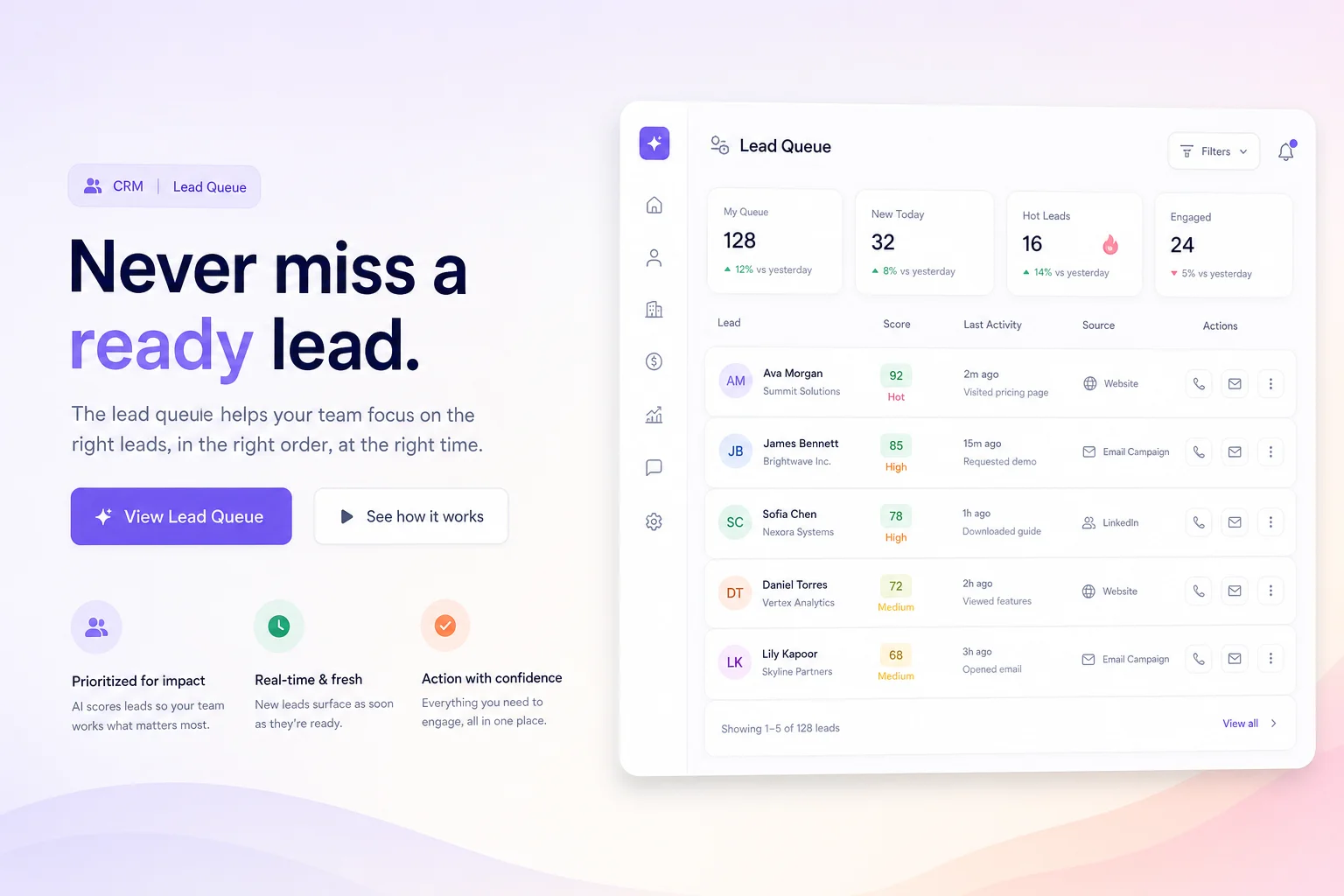

Table of Contents
- Introduction
- Why does your CRM hide urgency when every inbound lead looks the same?
- Why does speed to first touch beat clever copy for AI lead scoring small business teams?
- What does AI lead scoring for small business mean without enterprise ML models?
- How does Claude lead qualification automation use Haiku vs Sonnet?
- How do you design a scoring rubric that Claude can apply every time?
- How do you orchestrate Claude lead scoring and routing with n8n and your CRM?
- How do you keep humans in the loop without slowing hot leads?
- Which metrics prove your Claude lead scoring setup is working?
- What compliance and data quality guardrails matter for automated lead scoring?
- When does a DIY n8n lead scoring workflow break down?
- What should you automate first before adding Claude to lead qualification?
- When should you book a roadmap call to rank your lead automations?
- Frequently Asked Questions (FAQs)
Introduction
Your inbox is lying to you.
Every new lead looks the same: a name, an email, maybe a company and a vague note. Your CRM parks them in the default stage. Meanwhile, someone is ready to buy today, and someone else only wanted a PDF and will never pick up the phone.
For small B2B teams, that mismatch between volume and visibility is where money leaks. AI lead scoring for small business is not about training a black-box model on millions of rows. It is a transparent rubric plus Claude lead qualification automation that reads messy answers, assigns fit and intent scores, and routes each record to the right next action before your team works the list top to bottom.
This guide covers why urgency disappears in the CRM, how Haiku and Sonnet split volume vs nuance, how to wire n8n between lead sources and HubSpot or Pipedrive, and what to build first so scoring helps instead of adding complexity on a leaky funnel.
If leads already land in CRM but nobody follows up fast enough, start with why leads go quiet after the form. If Meta or form leads still arrive by CSV, fix Meta leads CRM automation before you score them.
Why does your CRM hide urgency when every inbound lead looks the same?
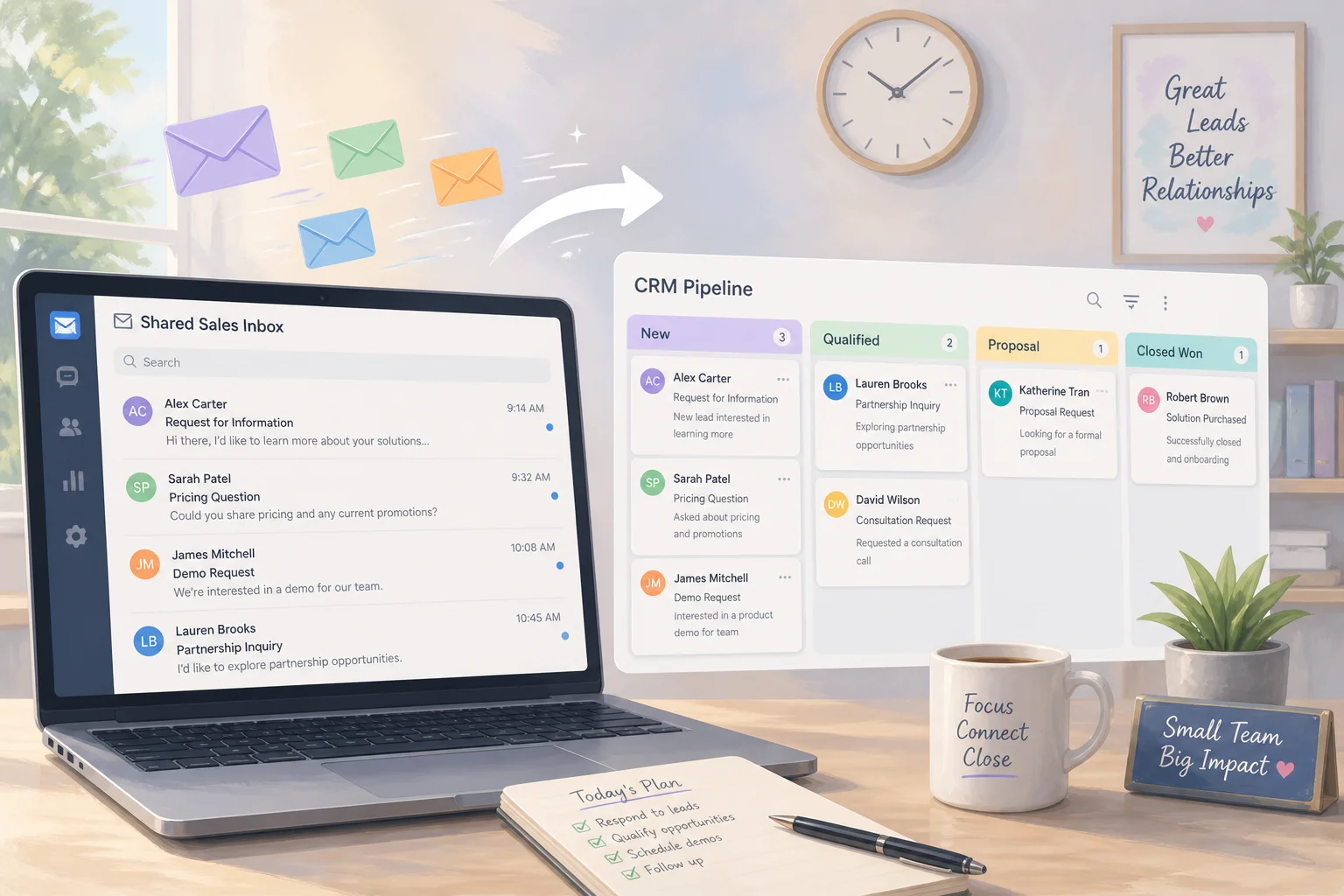
Meta lead ads, website forms, Typeform surveys, Instagram DMs, and click-to-message campaigns all feed the same pattern:
- Leads arrive from multiple channels at random times.
- Everything lands in HubSpot, Pipedrive, or a shared inbox with the same lifecycle stage.
- Reps work top to bottom, or chase whoever replied last, because fit and urgency are invisible.
When ad forms, inboxes, and spreadsheets connect without a qualification layer, high-intent demo requests wait hours while a rep manually reviews fields. Lower-fit but louder leads soak attention because they showed up when someone was free.
Manual qualification today usually looks like: form submission enters CRM, a human reads company size and budget, then decides whether to open a deal, nurture, or drop the lead. That delay and inconsistency kill conversion and burn sales time on triage instead of conversations.
Teams that automate from submission to scored, categorized, and followed-up lead in seconds cut response time from hours to near-instant and shrink the pile of forgotten records. The difference is making urgency, fit, and next steps explicit instead of implied.
Why does speed to first touch beat clever copy for AI lead scoring small business teams?
The two levers you control in inbound sales are speed to first touch and how reps spend their hours.
Modern lead automation KPIs center on time-to-contact, qualification accuracy, and engagement by channel for a reason: qualified leads who hear from you quickly and get consistent follow-up win more often.
Clear tiers (Hot, Warm, Cold) let you route Hot leads to sales instantly while Cold leads sit in nurture. Hot paths often mean Slack alerts, deal creation, and a short-fuse task like a 15-minute intro call. Without tiers, you get buyers cooling off because nobody saw budget approved this quarter in a free-text field, misaligned prospects getting custom Looms because they wrote a long enthusiastic message, and founders jumping into random deals because nobody shared which accounts fit your ICP.
Speed matters. Speeding up everything without judgment just burns more hours on the wrong people. AI lead scoring small business setups exist to make the right records fast, not to make all records loud.
What does AI lead scoring for small business mean without enterprise ML models?
Enterprise platforms talk about predictive scoring trained on huge histories. Most small B2B companies do not have the volume or clean data for that.
What you can ship instead combines three pieces:
- A simple scoring rubric grounded in your ICP and real conversion patterns.
- Claude classifying free-text answers, emails, and notes against that rubric.
- n8n (or similar) applying scores consistently and triggering routing.
AI in lead gen already qualifies on fit and intent, segments into hot, warm, and cold, and routes to owners or nurture flows. Your goal is not a mystery model. It is turning signals you already collect (asked for pricing, mentioned competitors, needs onboarding next month) into CRM properties that drive tasks and sequences.
No-code workflows often assign a 0-100 score from structured fields and map to tiers. Claude extends that pattern to text you are already collecting, not only checkboxes.
How does Claude lead qualification automation use Haiku vs Sonnet?
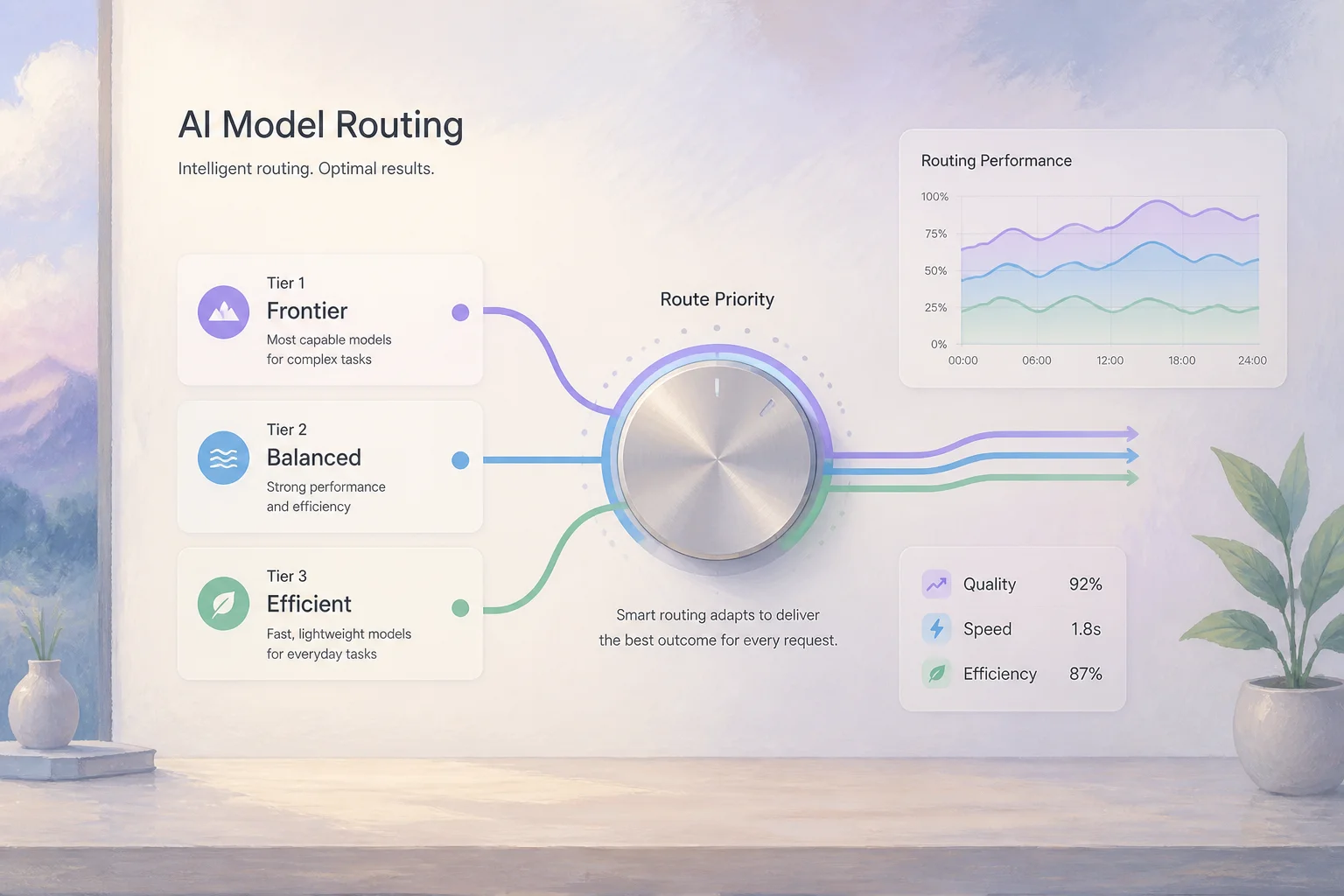
Anthropic's Claude line fits classification and routing well:
- Claude 3 Haiku is fast and inexpensive. Use it on every inbound lead: structured fields plus short free-text responses, fixed rubric, structured JSON out.
- Claude 3 Sonnet handles borderline or high-stakes cases: long survey answers, multi-thread email context, strategic account domains, or when Haiku returns a score in the gray zone (for example 68 on a scale where 70+ is A-tier).
Default path: Haiku classifies all leads. Escalate to Sonnet when the score is borderline, the domain is on a target list, or a human flagged the record as complex (multi-product, regulated industry, multi-stakeholder buying committee).
The output should be data, not prose: fit_score, intent_score, overall_score, tier (A/B/C), recommended_next_action, and optional flags like mentions competitor or needs compliance review.
How do you design a scoring rubric that Claude can apply every time?
The biggest mistake is skipping the human step: deciding what qualified means for you.
Practitioners who automate scoring consistently start the same way:
- Define ICP (company size, industry, geography, role).
- List factors that correlate with closed deals (budget, urgency, problem fit).
- Assign points and clear thresholds for hot and warm.
A practical split:
Fit score (0-50)
- Company size in your sweet spot: +10 to +20.
- Industry in ICP list: +10.
- Decision-maker or strong champion role: +10 to +15.
- Compatible tech stack mentioned: +5 to +10.
Intent score (0-50)
- Explicit demo or talk-to-sales request: +20.
- Budget, timeline, or onboarding constraints mentioned: +10 to +15.
- Specific problem your product solves: +10.
- High urgency (need solution in 30 days): +10 to +15.
Claude should not invent firmographics when enrichment already filled them in. It should read messy answers and map them into categories your rules understand.
Example instruction shape (adapt to your ICP):
Read the lead JSON below. Return JSON only:
- fit_score (0-50)
- intent_score (0-50)
- overall_score (0-100)
- tier: A if overall_score >= 70, B if 40-69, else C
- recommended_next_action (one short phrase)
Apply the rubric: [paste your rules]
Lead data: [fields]
That mirrors rule-based scoring nodes in workflow tools, except the logic lives in natural language you can version and review with sales.
How do you orchestrate Claude lead scoring and routing with n8n and your CRM?
Once the rubric exists, you need plumbing. n8n is built to capture webhooks, enrich records, score, update CRM objects, and branch on tiers.
How do you capture leads from every channel into one scoring workflow?
Set a trigger per source, all calling the same downstream path:
- Ads and forms: Meta Lead Ads to CRM, or JotForm, Typeform, and site forms posting to an n8n webhook.
- Messaging: New DM or message events via API integrations your stack exposes.
- Staging sheets: Google Sheets rows watched for new entries when teams still collect leads manually.
Until every channel lands reliably in one place, AI scoring only decorates a leaky funnel. Fix intake first; scoring second.
How do you call Claude and write fit, intent, and tier back to HubSpot or Pipedrive?
Typical sequence:
- Enrich company size, industry, and domain quality (business vs free email) before the model runs.
- Call Claude via HTTP or a Claude node with structured fields, free-text responses, ICP definition, and rubric. Default Haiku; branch to Sonnet on rules above.
- Write CRM properties such as AI Fit Score, AI Intent Score, AI Lead Tier, AI Recommended Action, Last Scored At. Create or update contact; optionally create deal for A-tier.
- Route: A-tier gets deal, two-hour call task, Slack alert to owner, and immediate calendar-link email. B-tier goes to SDR queue and a short sequence. C-tier enters nurture with no manual outreach.
For rep workflows that still live in Claude chat for one-off judgment, pair this pipeline with Claude MCP CRM patterns: automation owns scoring at intake; MCP owns nuanced replies later.
You can have Claude draft first-touch email from tier and context, but keep human approval on strategic accounts.
How do you keep humans in the loop without slowing hot leads?
Misclassification fear is valid and manageable if the system augments reps instead of replacing them.
AI ranks; humans review selectively.
- A-tier: AI creates tasks and drafts; rep reviews quickly and sends.
- B-tier: rep decides escalate vs nurture; AI supplies a short summary.
- C-tier: almost no human time unless behavior changes (demo request later).
Overrides: add Rep Override Tier and a note when sales disagrees. Export overrides monthly to refine rubric and prompts.
Sensitive segments: strategic or regulated accounts always need human approval before AI-sent email. Sonnet can analyze; humans send.
Clean data alone does not produce qualified leads. Humans still define qualified and tune the system over time. The win is enforcing agreed criteria without manual triage on every record.
Which metrics prove your Claude lead scoring setup is working?
Track a small set before and after launch:
- Time-to-contact by tier - A-tier should move from hours to minutes.
- Conversion rate by score band - A-tier should close at a much higher rate than B or C if the rubric is sound.
- Qualification accuracy - override rate and rep disagreement signal prompt or rule drift.
- Engagement per channel - reply and meeting rates on AI-drafted sequences vs purely manual outreach.
- Rep time allocation - more hours on A and B, less on C unless something changes.
For most small teams, making speed-to-first-touch by tier and conversion by band visible on a simple dashboard surfaces the main gaps faster than advanced next-best-action models.
What compliance and data quality guardrails matter for automated lead scoring?
Pragmatic guardrails even for small teams:
- Minimize sensitive attributes - do not score on protected characteristics; stick to firmographic and behavioral B2B fields.
- Transparent rules - document why points add or subtract so sales trusts the tier.
- Consent - forms and privacy policy cover automated processing and follow-up channels (email, SMS, WhatsApp).
- Model drift - when you move upmarket but the rubric still treats five-person startups as A-tier, override rates spike. Revisit ICP quarterly.
Often the biggest bias is reps chasing leads they enjoy talking to, not the model. A consistent rubric plus automation can reduce arbitrary human bias by enforcing criteria the team already agreed on.
When does a DIY n8n lead scoring workflow break down?
n8n, HubSpot, and Pipedrive make a week-one build realistic for a technical founder or RevOps-minded marketer. DIY breaks when:
- Channels multiply - new forms and campaigns every month without field-mapping discipline creates spaghetti branches.
- ICP or pricing shifts - hard-coded prompts without versioning quietly misalign tiers.
- Multiple CRMs or silos - agencies and multi-brand setups need clear data ownership, not another connector.
- Only one person understands the workflow - transparent CRM fields help, but you may need test environments, logging, and change control.
Mature teams often keep Claude, n8n, and the same CRM but bring help for monitoring, failure alerts, and documented handoffs. That usually appears when one to five people touch leads daily and balls drop because automations are brittle, not because tools are missing.
What should you automate first before adding Claude to lead qualification?
Building a scoring model before weekend follow-ups work is a common mistake. A pragmatic order:
- Fix Meta-to-CRM plumbing - every lead lands with fields you care about. See Meta leads CRM automation and lead follow-up after the form.
- Document ICP and qualification rubric - simple points and hot/warm thresholds from your own win/loss data.
- Rules-only scoring and routing - structured fields only, tiers written to CRM, Hot to sales and Cold to nurture.
- Layer Claude on free-text - Haiku on open-ended answers and email snippets.
- Sonnet for strategic or borderline cases - still with human review on sends.
- Tune sequences and messaging - measure reply and meeting rates.
- Advanced analytics later - next-best-action only after the first five steps are stable.
That sequence matches what to automate first for revenue: fix the bottleneck that loses deals today, then add intelligence on stable pipes.
When should you book a roadmap call to rank your lead automations?
The goal is simple: reps open CRM or inbox and see a ranked queue. Hottest leads are labeled with tasks attached. Lower tiers nurture automatically. Nobody guesses which record to click first.
Book a focused session when:
- Leads arrive reliably but nobody agrees which automations to build next (scoring vs follow-up vs sync).
- You added Claude or n8n pieces that conflict or duplicate (tool sprawl thinking helps here too).
- Multiple channels and CRMs make every change feel risky.
A 45-minute paid AI strategy call at /roadmap-call is a working session, not a sales pitch. You leave with ranked automations, Haiku vs Sonnet boundaries, human handoff rules, and a Claude-powered lead flow you can ship in about a week instead of someday.
Reserve my roadmap call when you want scoring, routing, and CRM sync sequenced against your actual stack and team size.
Frequently asked questions
Quick answers on the topics covered in this article.
A transparent point rubric on ICP fit and buying intent, plus automation (often Claude plus n8n) that applies the rubric to every inbound lead and writes tier and next action back to your CRM. You do not need millions of historical rows or a custom ML model.
Native CRM AI usually scores inside one product on fields that product already has. Claude lead qualification automation reads free-text form answers, email snippets, and notes, returns structured scores and tiers, and pairs with n8n to route across HubSpot, Pipedrive, Slack, and sequences you control.
Use Haiku on every lead for speed and cost with a fixed rubric and JSON output. Escalate to Sonnet for borderline scores, strategic account domains, long applications, or multi-touch context where nuance changes tier or recommended action.
Yes. Common pattern: webhook on form or ad lead, optional enrichment, Claude HTTP call with rubric, CRM update with custom score and tier fields, then branches for Slack alerts, deals, tasks, and nurture enrollment by tier.
At minimum: AI Fit Score, AI Intent Score, overall score, AI Lead Tier (A/B/C), AI Recommended Action, Last Scored At, and optionally Rep Override Tier. These make urgency visible in list views and reporting without opening the workflow editor.
Target minutes, not hours, for A-tier: task creation, owner alert, and calendar-link email often fire in the same workflow run. Measure median time-to-first-touch by tier before and after go-live.
Sync fixes arrival; scoring fixes priority. If reps still work leads in upload order, scoring and routing are the next layer. Stable intake plus tiers is what stops hot buyers waiting behind cold form fills.
Let AI assign tier and draft outreach; require quick human send on A-tier and approval on strategic accounts. Track override reasons and feed them back into rubric and prompt updates monthly.
Time-to-contact by tier, conversion rate by score band, rep override rate, and rep time spent per tier. Rising A-tier conversion and falling hours on C-tier usually mean the rubric matches reality.
When channels and CRMs multiply, only one person can edit workflows, or failures are silent. Help is less about replacing n8n and more about architecture, monitoring, and sequencing scoring vs follow-up vs sync so the stack stays maintainable.
Share this article
Related workflows
Domain Name Generator n8n workflow using ScrapingDog